
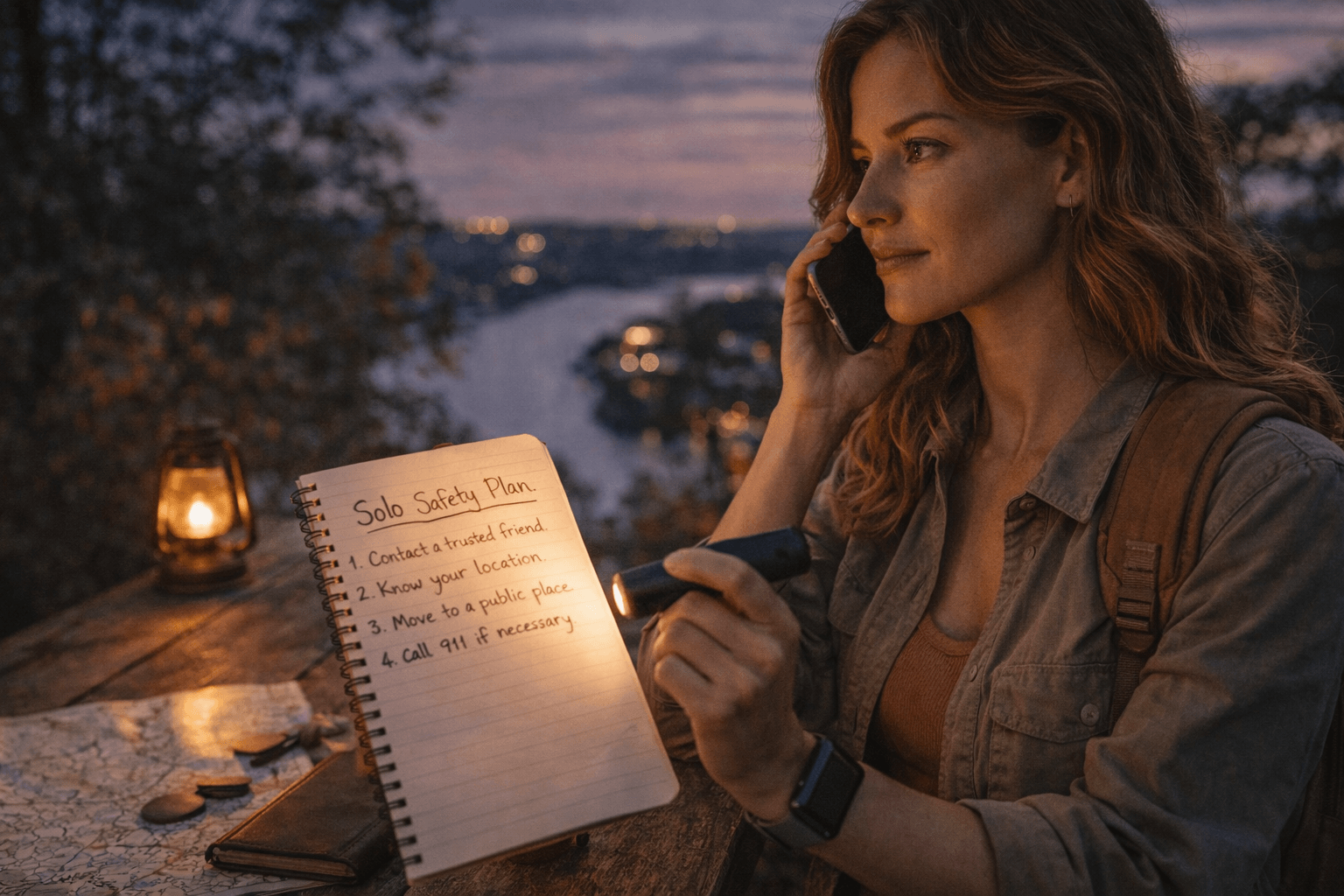
Traveling alone for a weekend from Austin can feel incredibly freeing, but there are moments when even confident solo women feel a sudden wave of unease. I’ve seen many solo travelers experience this — a quiet street that feels off, a conversation that shifts in tone, or a late evening where the atmosphere changes faster than expected. Knowing what to do in that exact moment is not about fear; it’s about having a calm plan that lets you stay steady, protect your space, and keep your trip emotionally intact.
This guide walks you through a practical, step-by-step solo female safety plan designed specifically for weekend travel rhythms near Austin. You’ll learn how to read your instincts, create distance without escalating situations, use simple scripts to set boundaries, and recover your calm afterward. The goal is clarity and reassurance: when you know exactly how to respond, you can travel with more confidence and enjoy your weekend knowing you’re prepared.
Table of Contents
ToggleUnderstanding the Moment You Start to Feel Unsafe
The first moment you feel unsafe while traveling alone is often subtle. It rarely looks dramatic. More often, it feels like a quiet tightening in your chest, a sense that something is slightly off, or a hesitation you can’t fully explain. I’ve seen many solo women dismiss this feeling at first because they don’t want to seem overcautious or ruin the mood of their trip. But that early signal is valuable. It’s your awareness sharpening, not your imagination overreacting.
For solo weekend trips from Austin, especially in unfamiliar towns or busy city pockets, recognizing this moment early gives you the widest range of calm options. You are not trying to label a place or a person as dangerous. You are simply noticing that your comfort level has shifted. The goal is to respond before discomfort grows into panic. When you treat that feeling as information instead of embarrassment, you keep control of the situation.
The Difference Between Anxiety and Real Safety Signals
Solo travel naturally brings a baseline level of alertness, especially if it’s your first few weekend trips. Anxiety tends to feel internal and repetitive — your mind loops through what-ifs without new evidence. Real safety signals, on the other hand, are tied to something observable in your environment. Learning to separate the two helps you act with clarity instead of confusion.
There are a few cues that often point to genuine safety signals:
-
A Sudden Change In Someone’s Behavior Toward You that feels intrusive or persistent
-
An Environment That Becomes Isolated Faster Than Expected such as a venue emptying out quickly
-
Repeated Boundary Crossings after you’ve given polite signals to disengage
-
Your Body Reacting Physically with tension, shallow breathing, or an strong urge to leave
-
A Mismatch Between The Setting And Your Comfort Level especially late in the evening
When these cues appear together, your nervous system is doing exactly what it’s designed to do: helping you notice patterns. You don’t need courtroom proof to act. You only need enough clarity to prioritize your comfort.
Why Solo Women Often Second-Guess Their Instincts
Many solo women from Austin tell me the hardest part is not recognizing discomfort — it’s trusting themselves enough to respond. There’s a quiet social pressure to be polite, agreeable, and not make a scene. During a weekend trip, you might worry about seeming rude to locals or overreacting in a place you don’t fully understand.
Second-guessing often sounds like internal negotiation. You might tell yourself you’re misreading the situation, that you should wait a little longer, or that leaving would look awkward. The truth is that most unsafe situations escalate slowly, and hesitation is what narrows your options. Acting early is almost always quieter and smoother than waiting.
A helpful mental shift is to treat your comfort as a non-negotiable travel priority. You are not accusing anyone of wrongdoing when you choose to move seats, step outside, or change locations. You are simply adjusting your environment to match your needs. That is a calm, adult decision — not a dramatic one.
A Quick Mental Reset You Can Use Anywhere
When discomfort hits, your mind can speed up in ways that make simple decisions feel harder. A short mental reset helps you return to steady thinking before you act. This reset is discreet and can be done in seconds, whether you’re in a café, on a street, or inside a rideshare.
A simple reset sequence looks like this:
-
Name What You’re Feeling Without Judgment such as quietly thinking, “I feel uneasy right now”
-
Scan For Immediate Exits Or Safe Spaces so your brain shifts into practical mode
-
Slow Your Breathing For Three Full Cycles to steady your body
-
Choose One Small Action like standing up or texting a friend
-
Focus Only On The Next Step instead of solving the entire situation
This reset anchors you in the present moment. Instead of spiraling into worst-case scenarios, you reconnect with what you can control. Most solo women find that once they take a single intentional step, their confidence returns quickly.
Your Immediate Solo Safety Plan (The First 5 Minutes)
When you first feel unsafe, the next five minutes matter more than anything else. Not because danger is inevitable, but because early, calm action keeps situations small and manageable. I’ve guided many solo women through this exact window of time, and what usually feels best is having a simple sequence to follow. You don’t need to invent a strategy on the spot. You just move through a few steady steps that create space, visibility, and connection.
Think of this plan as a quiet routine rather than an emergency reaction. During weekend trips near Austin, environments can shift quickly from lively to empty, especially in smaller towns or late evenings. A rehearsed mental script lets you respond smoothly without drawing attention. The goal is not to confront or accuse anyone. The goal is to reposition yourself into a setting where your comfort returns and your options widen.
Step 1: Create Physical Distance Calmly
Distance is your first and most powerful tool. You rarely need to explain why you’re moving. Standing up, stepping outside, or changing seats is socially normal behavior in most public spaces. Acting early allows you to move casually instead of urgently, which keeps the interaction low-key.
There are several gentle ways to create distance without escalation:
-
Stand Up And Shift Locations Naturally as if you’re stretching or exploring
-
Walk Toward A More Populated Area such as near a counter or entrance
-
Use A Neutral Excuse like needing fresh air or the restroom
-
Angle Your Body Toward An Exit to prepare for a smooth departure
-
Keep Your Pace Steady And Unhurried to avoid signaling panic
Even a few extra feet of space can lower your stress and give you clearer perspective. Most uncomfortable situations dissolve once distance is introduced.
Step 2: Move Toward Visible Safe Spaces
After creating distance, your next priority is visibility. Well-lit, populated areas naturally discourage unwanted attention and provide social protection. During Austin weekend getaways, this often means stepping into businesses that are open, active, and staffed.
Reliable safe spaces usually include:
-
Busy Cafés Or Restaurants where staff and patrons are present
-
Hotel Lobbies which are monitored and welcoming to guests and visitors
-
Retail Stores With Open Counters that create natural interaction points
-
Transportation Hubs like staffed stations or rideshare pickup zones
-
Community Spaces such as visitor centers or libraries
These environments allow you to blend in while resetting your composure. You are not hiding. You are repositioning yourself into a setting designed for public comfort.
Step 3: Reconnect With Someone You Trust
Connection stabilizes your nervous system quickly. Even a brief message to someone back in Austin can ground you and remind you that you are supported. You don’t need to explain everything. A simple check-in restores emotional balance.
Helpful connection actions include:
-
Sending A Quick Text Update about where you are
-
Starting A Casual Phone Call while you relocate
-
Sharing Your Live Location Temporarily with a trusted contact
-
Using Voice Messages if typing feels slow
-
Agreeing On A Short Check-In Time for reassurance
Most solo women find that hearing a familiar voice immediately softens tension. You are not asking for rescue. You are reinforcing your support network.
Step 4: Ground Your Body and Breathing
Once you’ve reached a safer space and reconnected with someone, your final step is internal reset. Your body may still carry adrenaline, which can cloud judgment if left unchecked. Grounding brings your system back to baseline so you can decide what to do next with clarity.
Simple grounding techniques work well in public settings:
-
Place Both Feet Firmly On The Floor and notice the pressure
-
Take Slow, Even Breaths counting four in and four out
-
Focus On Physical Sensations like the texture of a table or chair
-
Relax Your Shoulders And Jaw Intentionally
-
Remind Yourself Quietly That You Are Safe Now
This step is not optional. Emotional recovery is part of safety. When your body settles, your confidence returns, and your weekend trip regains its rhythm.
Safe Places Solo Women Can Use During Weekend Trips Near Austin
One of the most reassuring parts of solo travel is knowing that you are rarely as isolated as you might feel in the moment. During weekend trips from Austin, most towns and cities are built around shared public spaces that quietly function as safety anchors. I’ve seen many solo women relax almost instantly once they step into an place that feels structured, staffed, and socially active. The key is recognizing these spaces ahead of time so you don’t have to search for them under stress.
Safe places are not about hiding. They are about positioning yourself inside environments designed for public flow and accountability. When you know where to go, you regain a sense of agency. Instead of reacting emotionally, you are making a practical travel decision: choosing spaces that support calm exploration and easy exits.
Public Places That Naturally Offer Protection
Some public environments are protective simply because of how they are designed. They tend to be well-lit, open, and populated by a mix of people going about ordinary routines. These characteristics create a quiet layer of social safety that solo women can lean on during weekend travel.
Public spaces that usually feel grounding include:
-
Hotel Lobbies With Active Front Desks where staff presence is constant
-
Busy Coffee Shops And Casual Restaurants with steady foot traffic
-
Visitor Centers In Tourist Areas staffed by trained local employees
-
Libraries And Community Buildings that welcome quiet drop-ins
-
Museums Or Cultural Centers with ticket counters and security staff
These places allow you to sit, regroup, and observe your surroundings without pressure. You can stay as long as you need while deciding your next step.
Businesses That Are Usually Supportive to Solo Women
Certain businesses develop informal cultures of looking out for solo travelers. Staff in these spaces are accustomed to interacting with individuals who are exploring alone, which makes it easier to ask for small forms of assistance without feeling awkward.
Supportive business environments often include:
-
Boutique Hotels And Inns even if you are not staying there
-
Bookstores And Independent Shops with attentive staff
-
Day Spas And Wellness Studios that prioritize client comfort
-
Ride-Share Pickup Points Inside Hotels for controlled waiting areas
-
Coworking Spaces With Reception Desks open to visitors
In these settings, you can casually mention that you’re waiting for transportation or need a moment to plan. Most staff respond with quiet professionalism and respect.
Transportation Hubs as Reset Points
Transportation hubs serve as practical reset zones during solo weekend trips. They are designed around movement, scheduling, and customer service, which naturally supports travelers who need orientation or assistance. Even smaller towns near Austin often maintain structured transit points that feel organized and predictable.
Useful transportation reset points include:
-
Staffed Train Or Bus Stations with visible service counters
-
Airport Terminals even regional ones with security presence
-
Designated Ride-Share Zones near hotels or downtown centers
-
Parking Garages With Attendants instead of isolated lots
-
Tour Shuttle Pickup Locations in tourist districts
These hubs give you access to information, lighting, and people whose roles involve helping travelers. Stepping into one can immediately restore a sense of order and direction.
What to Say When Someone Makes You Uncomfortable (Safety Scripts)
One of the hardest parts of feeling unsafe while traveling alone is knowing what to say in the moment. Many solo women worry about sounding rude or escalating a situation, especially during relaxed weekend trips from Austin where the social tone is friendly. I’ve seen this hesitation create unnecessary stress. The truth is that you don’t need clever words or confrontation. You only need a few simple scripts that protect your boundaries while keeping your voice calm and steady.
Safety scripts work because they remove decision fatigue. Instead of searching for the perfect sentence, you reach for a phrase you’ve already practiced. Your tone matters more than your wording. A neutral, confident delivery often ends uncomfortable interactions quickly. These scripts are not accusations. They are tools that help you exit conversations, create space, and signal that your attention is no longer available.
Firm but Polite Boundary Scripts
Most uncomfortable interactions start small. Someone may stand too close, ask overly personal questions, or continue a conversation after you’ve shown disinterest. Early boundary scripts allow you to redirect the interaction before it grows heavier. What usually feels best is a tone that is calm, clear, and emotionally neutral.
Effective boundary scripts include:
-
“I’m Not Interested, But Thank You.” delivered with steady eye contact
-
“I’d Like Some Quiet Time Right Now.” paired with turning back to your activity
-
“I’m Waiting For Someone.” which subtly signals limited availability
-
“I Prefer To Be Alone Today.” spoken in a relaxed, matter-of-fact tone
-
“I’m Going To Step Away Now.” while physically creating distance
These phrases close the conversational door without inviting debate. You are stating a preference, not asking permission.
Direct Exit Scripts for Ending Conversations
If someone ignores softer boundaries, you may need a clearer exit line. During weekend travel near Austin, most social interactions are brief and situational. A direct exit script allows you to disengage cleanly and move toward a safer space without lingering.
Helpful exit scripts include:
-
“I Need To Go Now.” followed by immediate movement
-
“Excuse Me.” repeated once if necessary while stepping away
-
“I’m Leaving.” stated calmly and without explanation
-
“This Conversation Is Over.” if persistence continues
-
Silence Paired With Walking Away when words feel unnecessary
Movement is part of the script. Your body reinforces your message. Once you begin leaving, avoid re-engaging.
Emergency Attention-Drawing Scripts
In rare moments when you feel genuinely threatened, drawing attention becomes protective. Most people nearby are willing to help once they understand that assistance is needed. Your voice does not have to be loud or panicked. It only needs to be clear enough to signal urgency.
Attention-drawing scripts include:
-
“I Need Help.” spoken toward nearby staff or groups
-
“Please Stay With Me.” directed at a specific bystander
-
“Can Someone Call Security?” in staffed environments
-
“This Person Is Making Me Uncomfortable.” stated plainly
-
Calling A Trusted Contact On Speaker and narrating your location
These phrases shift the situation from private to public. That visibility alone often stops unwanted behavior.
How to Use Your Phone as a Safety Tool Without Escalating the Situation
Your phone is one of the most effective safety tools you carry during a solo weekend trip, but how you use it matters. The goal is to increase your security quietly, without escalating tension or signaling panic. I’ve seen many solo women feel torn between wanting to document a situation and wanting to stay discreet. In most cases, subtle, practical phone use gives you the strongest advantage.
When used calmly, your phone becomes an anchor. It reconnects you to familiar people, reliable information, and navigation options. During weekend travel near Austin, where you may be moving between small towns, parks, and city pockets, your phone acts like a portable support system. The key is preparing a few features in advance so you can access them instantly under stress.
Location Sharing and Quick Contacts
Temporary location sharing can feel deeply reassuring when you’re unsettled. It doesn’t mean you expect something to go wrong. It simply adds a quiet layer of accountability and connection. Most solo women find comfort in knowing that someone back home can see where they are if needed.
Useful connection habits include:
-
Sharing Live Location With A Trusted Contact for a short window
-
Keeping One Emergency Contact Pinned at the top of your messages
-
Using Speed Dial Or Favorites for instant calling
-
Sending A Simple Status Text like your location and next stop
-
Agreeing On Casual Check-In Times during evening outings
These actions stabilize your emotional state as much as they support logistics.
Discreet Safety Apps and Features
Modern phones include built-in safety tools that work quietly in the background. You don’t need complicated apps or constant monitoring. A few simple features can give you fast access to help while keeping your behavior outwardly normal.
Helpful discreet tools include:
-
Emergency SOS Features that alert contacts with button presses
-
Ride-Share Apps Open And Ready for quick exit transportation
-
Map Apps Showing Nearby Safe Businesses in real time
-
Voice Assistants to place calls without typing
-
Battery-Saving Modes to preserve power during long days
Preparing these tools before you leave Austin reduces friction when you need them most.
When to Call Local Help
Most uncomfortable situations resolve with distance and repositioning, but it’s important to recognize when outside help is appropriate. Calling for assistance is not overreacting. It is a practical decision when your safety feels uncertain or compromised.
Situations that justify contacting local help include:
-
Someone Following You After You Move Locations
-
Repeated Harassment That Does Not Stop
-
Feeling Trapped In An Isolated Area
-
Direct Threats Or Aggressive Behavior
-
Medical Or Emotional Distress that prevents clear thinking
In these moments, clarity matters more than politeness. Your safety takes priority over social comfort.
Reading Environments During Austin Weekend Getaways
A large part of solo safety is not about reacting to danger but learning how to read environments before discomfort builds. Every place carries a rhythm. Some spaces feel open and supportive, while others subtly signal that it may be time to adjust your plans. I’ve seen many solo women become dramatically more confident once they learn to scan environments the way experienced travelers do. It’s a quiet skill that turns uncertainty into information.
During weekend trips from Austin, you often move through mixed settings: lively downtown blocks, scenic outdoor areas, boutique towns, and evening venues. Each setting asks for small adjustments in pacing and positioning. Reading an environment is not about suspicion. It’s about noticing energy, visibility, and flow so you can place yourself where comfort is strongest.
Daytime Exploration Safety Signals
Daytime travel usually offers the widest safety margin, but even bright hours carry subtle cues. When you arrive in a new area, take a moment to observe how people are moving and interacting. Safe-feeling daytime environments tend to share predictable characteristics that support relaxed exploration.
Positive daytime signals often include:
-
Steady Foot Traffic With Mixed Groups Of People rather than isolated clusters
-
Open Businesses With Visible Staff and active storefronts
-
Clear Sightlines Across Streets And Public Areas
-
Well-Maintained Public Spaces that show regular care
-
Easy Access To Transportation Or Ride-Share Pickup Points
If an area feels unusually empty or disorganized for the time of day, it may simply be quieter than expected. Still, adjusting your route toward busier zones usually restores comfort quickly.
Evening and Night Rhythm Adjustments
Evenings require a gentle shift in strategy. As daylight fades, social energy concentrates into specific pockets: restaurants, entertainment districts, and hotel zones. Solo women often feel safest when they align their evening plans with these natural hubs instead of wandering between them.
Helpful evening adjustments include:
-
Choosing Venues Near Each Other to reduce long solo walks
-
Arriving Earlier In The Evening before crowds thin out
-
Preferring Well-Lit Streets With Ongoing Activity
-
Scheduling Transportation In Advance for smooth departures
-
Keeping Your Accommodation Within Easy Reach
These choices preserve the relaxed rhythm of a weekend trip while quietly strengthening your safety net.
Choosing Seating and Positioning in Public Spaces
Where you place yourself inside a space matters more than many travelers realize. Seating choices influence visibility, exit access, and social comfort. Experienced solo travelers naturally gravitate toward positions that offer both awareness and ease.
Comfort-supportive positioning often looks like:
-
Sitting Where You Can See Entrances And Exits without staring
-
Choosing Seats Near Staff Or Service Counters
-
Avoiding Deep Corners Or Isolated Sections late in the day
-
Keeping Personal Items Close And Organized
-
Maintaining A Clear Path To Stand And Leave if needed
These small decisions create a sense of control. When you know you can move freely, your mind relaxes and your attention returns to enjoying the experience.
If You Need to Leave a Place Quickly
Most of the time, solo travel safety is about small adjustments. But occasionally, you may feel a clear need to leave a place faster than you originally planned. This doesn’t mean you’ve done anything wrong or that your trip is falling apart. I’ve seen many solo women treat quick exits as failures, when in reality they are signs of strong situational awareness. Leaving early is a calm, intelligent travel decision.
During weekend trips near Austin, environments can change quickly. A venue can empty out, the mood can shift, or your own energy can drop in ways that make staying feel uncomfortable. Having a simple exit strategy protects your confidence. You are not running away. You are choosing a better environment for the next part of your evening.
Planning a Calm Exit Route
The easiest exits are the ones you quietly plan before you need them. When you enter a space, take a few seconds to notice doors, pathways, and the general layout. This habit becomes automatic with practice and removes hesitation if you decide to leave.
A calm exit plan usually includes:
-
Identifying At Least One Clear Exit Door as soon as you arrive
-
Keeping Your Belongings Organized And Reachable
-
Positioning Yourself With A Direct Path To Walk Out
-
Avoiding Deep Interior Spots late in the evening
-
Knowing The Direction Of The Street Or Main Area Outside
When you stand up to leave, move with steady purpose. Most exits attract little attention when they look intentional.
Using Staff and Bystanders for Support
You do not have to handle uncomfortable moments alone. Staff members and nearby bystanders can act as quiet allies when needed. I’ve seen many solo women hesitate to involve others because they don’t want to cause a scene. In reality, brief, calm requests for help are socially normal in public places.
Supportive actions you can take include:
-
Standing Near Staff While You Prepare To Leave
-
Telling A Staff Member You Feel Uncomfortable in a low voice
-
Asking Someone To Walk With You To The Door
-
Joining A Small Group Heading Outside if timing allows
-
Waiting Near Security Or Reception Areas for transportation
Most people respond with simple, practical kindness when they understand you need assistance.
Transportation Backup Options Near Austin
Having transportation ready is one of the strongest exit tools you can carry. During Austin-area weekend trips, rideshare services and local transit are widely available, but it helps to think one step ahead. Backup transportation removes the pressure of figuring out logistics under stress.
Reliable transportation habits include:
-
Keeping Ride-Share Apps Open And Logged In
-
Saving Your Accommodation Address In Your Phone
-
Pre-Checking Late-Night Transportation Availability
-
Standing In Well-Lit Pickup Zones while you wait
-
Having A Secondary Destination like a hotel lobby nearby
When transportation is already in motion, your mind shifts from worry to forward movement.
Rebuilding Calm After a Scary Moment
Even when you handle an uncomfortable situation well, your body may carry the echo of it afterward. Adrenaline can linger longer than the event itself, and I’ve seen many solo women mistake that lingering tension for a sign that their trip is ruined. In reality, a scary moment does not define your weekend. What matters is how you guide yourself back to calm.
Rebuilding your emotional balance is part of solo travel safety. When you intentionally reset, you protect your confidence and preserve the joy of your trip. Weekend travel from Austin is meant to feel restorative, and a brief disruption does not cancel that purpose. With a few grounded steps, you can return to a steady rhythm and continue your plans with clarity.
Emotional Reset Techniques
Your nervous system needs clear signals that the stressful moment has passed. Small physical and sensory actions help your body process adrenaline and return to baseline. These techniques are simple enough to use in a café, hotel room, or quiet outdoor space.
Effective reset actions include:
-
Sitting In A Comfortable, Public Place where you feel supported
-
Drinking Water Or A Warm Beverage Slowly to steady your breathing
-
Taking A Short Walk In A Busy Area to reorient your senses
-
Listening To Familiar Music Or A Podcast through headphones
-
Texting A Trusted Friend and sharing what happened briefly
These steps reconnect you to normalcy. Your goal is not to analyze the event immediately but to reestablish emotional safety.
Deciding Whether to Continue or Rest
After a stressful moment, you have two valid options: continue your plans or pause and rest. There is no universal rule. What usually feels best depends on your energy level and the pace of your weekend itinerary.
When deciding your next move, consider:
-
Your Current Energy And Emotional State
-
The Distance Back To Your Accommodation
-
Whether Your Next Activity Feels Restorative Or Demanding
-
The Time Of Day And Lighting Conditions
-
Your Desire For Quiet Versus Social Space
Choosing rest is not retreat. Sometimes returning to your room, showering, and resetting for an hour is the fastest path back to enjoyment.
Protecting Your Confidence for the Rest of the Trip
A single uncomfortable encounter can quietly shake your confidence if you replay it repeatedly. I’ve seen many solo women regain their footing by reframing the moment as evidence of their capability. You recognized discomfort, acted decisively, and protected yourself. That is strength in practice.
To reinforce your confidence:
-
Acknowledge The Skills You Used Successfully
-
Avoid Catastrophic Storytelling about what could have happened
-
Return To A Familiar, Enjoyable Activity
-
Stick To Well-Planned Areas For The Evening
-
Remind Yourself Why You Chose This Trip
Confidence rebuilds through forward motion. Each calm step reminds you that you remain in control of your experience.
Preventive Habits That Reduce Unsafe Situations
The most effective solo safety strategies happen long before anything feels wrong. Prevention is quiet and often invisible, but it shapes how smoothly your weekend unfolds. I’ve seen many solo women from Austin travel for years without major incidents because they build simple habits into their planning. These habits don’t restrict freedom. They create a supportive structure that lets you relax and enjoy your trip.
Preventive thinking is not about expecting danger. It’s about designing your weekend rhythm so that comfort comes naturally. When your arrival timing, accommodation choices, and evening plans align with your energy, you reduce the chances of ending up in situations that feel uncertain or rushed.
Arrival Timing and Weekend Planning
How and when you arrive sets the emotional tone of your entire trip. Daylight arrivals almost always feel calmer, especially in unfamiliar towns. They give you time to orient yourself without pressure and settle into your accommodation before evening activities begin.
Helpful arrival habits include:
-
Planning To Reach Your Destination Before Sunset when possible
-
Allowing Extra Travel Buffer Time to avoid rushing decisions
-
Scheduling Your First Activity Near Your Accommodation
-
Researching Neighborhood Layouts In Advance
-
Saving Key Locations In Your Map App before departure
A calm arrival creates momentum. You start your weekend grounded instead of scrambling.
Accommodation Safety Choices
Where you stay influences how safe your evenings feel. Accommodation is not only about comfort or aesthetics. It’s your anchor point — the place you return to when you need rest or reset. Choosing thoughtfully reduces friction throughout your trip.
Strong accommodation habits include:
-
Booking In Central, Walkable Areas with visible activity
-
Reading Reviews From Other Solo Travelers
-
Preferring Properties With 24-Hour Front Desks
-
Checking Entry And Exit Layouts Upon Arrival
-
Keeping Your Room Number Private in public spaces
These choices add layers of quiet security that support relaxed exploration.
Evening Routine Design
Evenings are when most solo women feel the biggest emotional shift. Energy drops, lighting changes, and social dynamics evolve. Designing your evenings intentionally keeps them restorative instead of draining.
Supportive evening habits include:
-
Planning Dinner In Advance near active areas
-
Limiting Long Solo Walks After Dark
-
Scheduling Transportation Before Leaving Venues
-
Returning To Your Accommodation At A Comfortable Hour
-
Creating A Calm Wind-Down Ritual like tea or journaling
When evenings feel structured and gentle, your nervous system stays steady and your confidence carries into the next day.
Creating Your Personal Solo Safety Ritual Before Every Trip
Confidence during solo travel rarely comes from reacting well in the moment. It comes from preparation that feels personal and repeatable. I’ve seen many solo women develop small pre-trip rituals that anchor them emotionally before they even leave Austin. These rituals are not complicated checklists. They are habits that signal to your brain that you are organized, supported, and ready.
A personal safety ritual turns preparation into reassurance. Instead of packing in a rush or mentally juggling loose details, you move through a familiar sequence that steadies you. By the time your weekend trip begins, you’ve already created a quiet foundation of trust in yourself.
Mental Preparation Checklist
Mental preparation is about aligning expectations with reality. Solo weekend travel includes small uncertainties, and acknowledging that in advance prevents surprise from turning into stress. A short reflective pause before departure helps you enter your trip with clarity.
A useful mental preparation ritual includes:
-
Visualizing Your Arrival And First Hour Calmly
-
Reviewing Your Itinerary Without Overloading It
-
Reminding Yourself Of Past Solo Successes
-
Accepting That Plans Can Adjust Smoothly
-
Setting A Gentle Intention For The Weekend
This mindset keeps your expectations flexible and your reactions steady.
Communication Plans With Home
Knowing how and when you’ll check in with people back home removes background worry. Communication plans are not about constant reporting. They are simple agreements that create emotional safety for both you and your loved ones.
Healthy communication habits include:
-
Sharing Your Accommodation Details With A Trusted Contact
-
Agreeing On Daily Check-In Windows rather than constant updates
-
Sending Arrival And Departure Messages
-
Keeping Emergency Contacts Easy To Reach
-
Letting Someone Know Your General Weekend Outline
These steps build a quiet support system that travels with you.
Packing for Emotional Security
What you pack affects more than logistics. Familiar objects can stabilize your mood and energy, especially after long travel days. Emotional security items are small comforts that help you reset quickly when needed.
Supportive packing choices include:
-
Comfortable Clothing That Matches Your Environment
-
A Familiar Sleep Item like a scarf or small pillowcase
-
Snacks Or Tea You Enjoy
-
Headphones For Personal Space
-
A Small Journal Or Book for quiet moments
These items act as portable anchors. They remind you that even in new places, you carry pieces of home with you.
Final Thoughts: Feeling Unsafe Does Not Mean You Failed
Feeling unsafe at some point during solo travel is not a sign that you made a bad decision or that you are not suited for traveling alone. It is part of being a perceptive human moving through unfamiliar spaces. I’ve seen many solo women interpret a single uncomfortable moment as evidence that they should stop traveling alone, when in reality it often proves the opposite. You noticed your environment, trusted your instincts, and took steps to protect yourself. That is competence in action.
Solo weekend trips from Austin are not about eliminating every uncertain moment. They are about learning how to respond calmly when uncertainty appears. The safety plan you now carry is not meant to make you hypervigilant. It exists so your mind can relax. When you know you have tools, scripts, and habits that support you, fear loses its grip and curiosity returns.
What usually feels most empowering is recognizing that safety and freedom are not opposites. They work together. Each time you navigate a situation with steadiness, your confidence deepens. You become a traveler who trusts her judgment, adjusts her environment when needed, and continues exploring with clarity. That quiet self-trust is the foundation of meaningful solo travel.
Related Posts
- What Solo Women Should Expect Emotionally on a First Weekend Trip
- How to Track Your Weekend Trip Budget & Stay Organized
- Budget-Friendly Solo Female Weekend Trips from Austin That Still Feel Easy
- Solo Weekend Trip From Austin: Confidence & Mindset for Women
- Best Campgrounds Near Austin That Feel Safe and Comfortable for Solo Women
- Wimberley Solo Female Getaway Guide from Austin
- How to Say No Politely While Traveling Alone from Austin (Solo Female Scripts for Every Situation)
- Solo Female Safety Tips for Weekend Trips Around Austin