
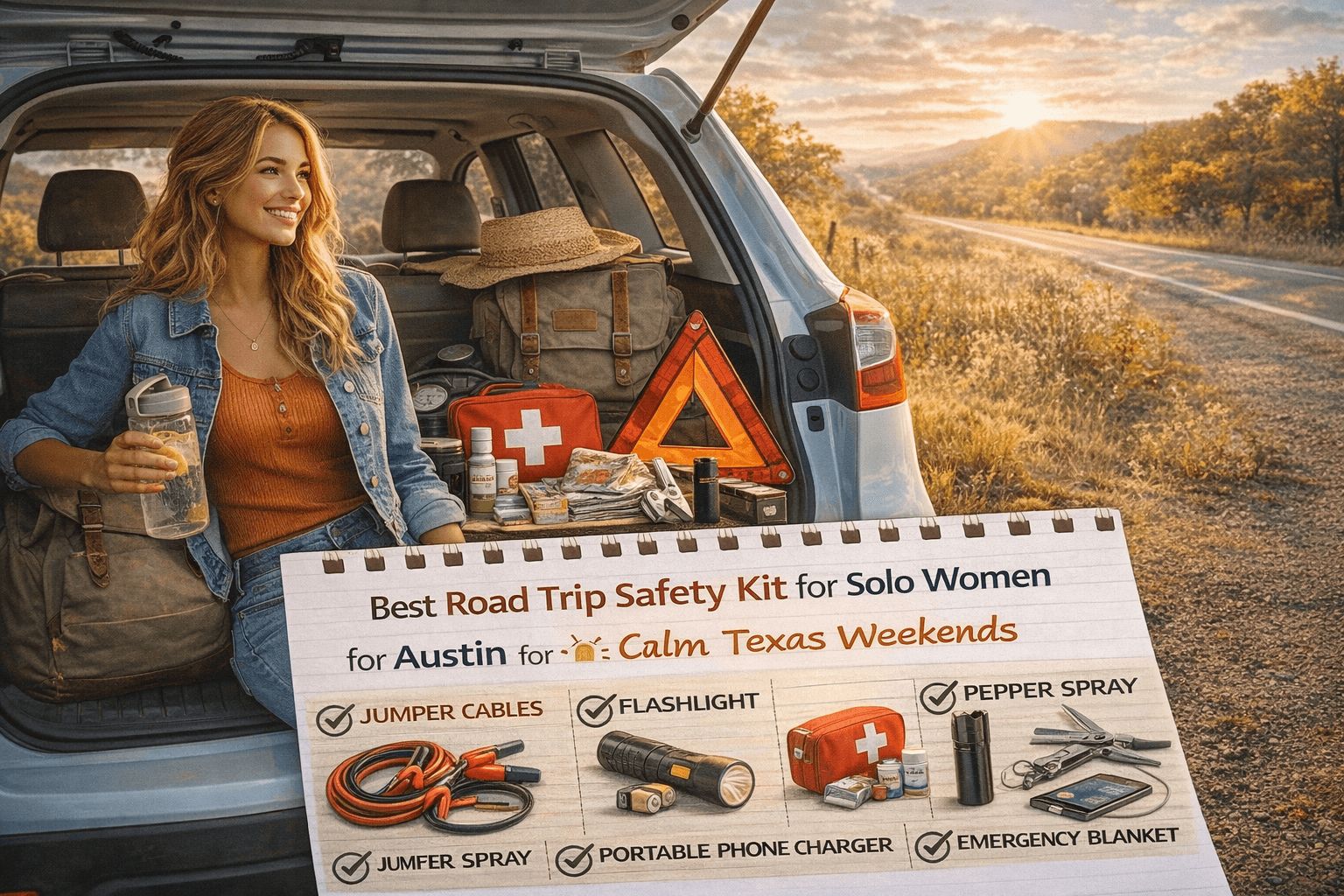
A solo road trip out of Austin carries a special kind of freedom. You control the music, the pace, and the decision to pull over when something catches your eye. At the same time, long Texas highways and changing weather can quietly raise practical questions about preparedness. Many solo women tell me that having a thoughtful road trip safety kit helps them settle into the drive faster, because it removes the background worry of “what if something small goes wrong.”
This guide walks through a realistic road trip safety kit designed specifically for solo women taking Texas weekend trips from Austin. We’ll cover what actually belongs in your car, how to organize it so it’s usable, and how to turn preparation into calm routines rather than stress. The focus is simple: helping you drive with steady confidence, knowing you’re equipped for common situations without overpacking.
Table of Contents
ToggleWhy a Road Trip Safety Kit Matters for Solo Women Leaving Austin
Leaving Austin for a weekend road trip often means covering long stretches of highway, passing through small towns, and navigating areas where services can be spaced far apart. Even on well-traveled Texas routes, there can be moments where you’re between gas stations or driving through quiet rural areas. A road trip safety kit acts as a steady baseline in those situations. It doesn’t suggest that something will go wrong. It simply ensures that if a minor issue appears, you’re not scrambling to improvise.
I’ve seen many solo women feel noticeably more relaxed once they know their car holds a few essential backups. That knowledge changes the emotional tone of the drive. Instead of mentally rehearsing worst-case scenarios, you trust that you’ve covered the basics. That trust allows you to enjoy the scenery, focus on the road, and settle into the rhythm of travel.
Preparedness as comfort, not fear
Preparedness is often misunderstood as pessimism. In reality, it’s a form of self-care. When you prepare thoughtfully, you’re acknowledging that travel includes variables and choosing to meet them calmly. A safety kit is similar to packing a rain jacket. You don’t expect a storm, but you appreciate having options.
For solo women, this mindset can be especially empowering. You’re reinforcing the idea that you can handle small disruptions independently. That quiet confidence builds over time. Each trip becomes evidence that you’re capable and organized, which strengthens your willingness to explore farther.
Texas driving realities and weekend distances
Texas distances can be deceptive. A destination that looks close on a map may still involve hours of open highway. Weekend trips from Austin often pass through areas where cell service fluctuates and roadside assistance may take time to arrive. These realities aren’t alarming; they’re simply part of the landscape.
A well-considered safety kit reflects those conditions. Extra water, basic signaling tools, and simple emergency supplies acknowledge the environment you’re traveling through. When your gear matches the terrain, you feel aligned with your surroundings rather than caught off guard by them.
How a safety kit reduces decision fatigue on the road
Driving alone already requires sustained attention. Navigation, traffic, and changing road conditions all compete for mental space. If a small issue arises and you’re unsure what to do, decision fatigue can compound quickly. A prepared safety kit shortens that decision chain.
When you know exactly where your supplies are and how to use them, your response becomes automatic. You don’t waste energy debating options or searching through your trunk. Many experienced solo travelers rely on this predictability. It conserves mental bandwidth and keeps the overall experience calm.
A road trip safety kit ultimately serves as a quiet framework for independence. It supports your ability to respond to common situations without drama. From that stable foundation, the open road feels less uncertain and more inviting.
The Core Safety Essentials Every Solo Woman Should Keep in Her Car
A road trip safety kit doesn’t need to be large to be effective. In fact, the most useful kits are intentionally simple. They focus on a small group of essentials that address the most common roadside situations: visibility, minor health needs, and communication. When these basics are covered, everything else feels less urgent.
Many solo women feel overwhelmed when they see long emergency packing lists online. What usually works better is starting with a tight core set of items you understand and can access quickly. These essentials act as your foundation. They support calm problem-solving without turning your trunk into a storage unit.
Emergency visibility and signaling tools
If you ever need to stop on the roadside, visibility becomes your first priority. Other drivers should be able to see you clearly and early. Simple signaling tools create a protective buffer around your vehicle and give you time to think.
A practical visibility kit typically includes:
-
A reflective safety vest that you can slip on before exiting the car
-
A compact flashlight with fresh batteries or rechargeable power
-
Reflective warning triangles or LED roadside flares
-
A small whistle for attracting attention if needed
These items are lightweight but powerful. They help you communicate your presence without relying solely on your car’s hazard lights. For solo women, that extra layer of signaling often brings an immediate sense of steadiness.
Basic first-aid and health items
Minor scrapes, headaches, or fatigue can feel amplified when you’re traveling alone. A compact first-aid pouch addresses everyday health needs and prevents small discomforts from escalating into distractions.
A realistic car first-aid kit should contain:
-
Adhesive bandages and antiseptic wipes
-
Pain relievers you already use and trust
-
Any personal medications in labeled containers
-
Hand sanitizer and a few disposable gloves
The goal isn’t to prepare for major medical events. It’s to manage routine issues efficiently. When you know you can handle small setbacks, you maintain momentum and focus.
Power, communication, and navigation backups
Modern road trips depend heavily on phones for navigation and communication. Losing power can quickly increase stress, especially in unfamiliar areas. Backup charging and basic navigation tools act as quiet insurance.
Your core tech essentials should include:
-
A reliable car phone charger and a portable power bank
-
A printed map or written directions for your general route
-
A list of important contacts saved offline
-
A pen and small notebook for quick notes
These items ensure you’re never fully dependent on a single system. If your phone battery drops or signal weakens, you still have orientation and a way to reach help. For many solo women, that redundancy is what transforms uncertainty into calm readiness.
Building this core set of essentials creates a stable base for every Texas weekend trip. Once these fundamentals are in place, additional gear becomes optional rather than urgent. You’re driving with a quiet framework of support that travels with you from one destination to the next.
Car Emergency Gear That Supports Real Texas Road Conditions
Texas road trips come with their own environmental rhythm. Heat can build quickly inside a parked car, storms can appear with little warning, and long stretches of highway may offer limited services. Emergency gear that matches these realities isn’t about expecting breakdowns. It’s about respecting the landscape you’re traveling through and preparing for the most common inconveniences.
I’ve seen many solo women feel reassured when their car holds a few practical items tailored to Texas conditions. These tools don’t take up much space, but they quietly expand your margin for comfort. If you ever have to pause on the roadside or wait for assistance, you’re equipped to handle the moment without panic.
Heat, weather, and hydration considerations
Heat management is one of the most important aspects of Texas driving. Even short delays can feel draining if you’re underprepared. Keeping hydration and weather basics in your car supports both safety and comfort.
A realistic weather kit usually includes:
-
Extra bottled water stored in a shaded part of the trunk
-
A lightweight blanket or towel for temperature swings
-
Sunscreen and lip balm to prevent sun fatigue
-
A compact umbrella or rain poncho
These items address everyday exposure rather than extreme scenarios. They help you stay physically steady if you need to step outside your vehicle or wait in warm conditions.
Tire and roadside basics for non-mechanics
You don’t need to be a mechanic to carry a few simple roadside tools. The goal is not to perform complex repairs. It’s to manage common issues or support roadside assistance effectively.
For most solo women, the following basics are sufficient:
-
A portable tire inflator or sealant designed for emergency use
-
A tire pressure gauge for quick checks
-
Jumper cables or a compact jump starter
-
A pair of work gloves to protect your hands
These tools are straightforward and widely used. Even if you never deploy them yourself, having them available can shorten delays and increase your options.
Items that make waiting for help more comfortable
If you ever find yourself waiting for roadside assistance, comfort becomes a practical concern. Small items can transform that waiting period from stressful to manageable.
Many experienced road travelers keep:
-
A fully charged portable phone battery
-
Non-perishable snacks that tolerate heat
-
A small folding seat cushion or mat
-
Tissues and wet wipes for quick cleanup
These additions acknowledge a simple truth: waiting is easier when your basic needs are met. Comfort supports clear thinking. When you feel physically cared for, you’re better able to make calm decisions.
Car emergency gear tailored to Texas conditions acts as a quiet buffer between you and the unpredictability of the road. It doesn’t complicate your trip. It simplifies your response to common situations, allowing you to continue driving with steady confidence.
Personal Safety and Comfort Items for Solo Road Trips
A road trip safety kit isn’t only about the car. It’s also about you. Long solo drives ask a lot from your body and attention. Small personal items can support alertness, comfort, and confidence in ways that feel subtle but meaningful. When your immediate needs are covered, you’re less distracted and more present behind the wheel.
Many solo women discover that personal comfort items end up being the most frequently used part of their safety kit. These aren’t emergency tools. They’re everyday supports that make the drive smoother and help you maintain a steady energy level from Austin to your destination.
Everyday carry items that add reassurance
Certain items are best kept within arm’s reach rather than stored in the trunk. These tools support quick adjustments and small moments of reassurance during the drive.
A practical everyday carry setup often includes:
-
A compact personal safety alarm or whistle
-
A phone mount that keeps navigation at eye level
-
Sunglasses that reduce glare and eye strain
-
A small pouch for ID, cards, and essentials
Keeping these items organized in a predictable place reduces fumbling and distraction. When you can reach what you need without searching, your focus stays on the road.
Clothing and comfort layers for long drives
Texas weather can shift quickly between air-conditioned interiors and outdoor heat. Clothing layers help regulate your comfort and prevent fatigue caused by temperature swings.
Many solo road travelers keep:
-
A lightweight jacket or wrap within easy reach
-
Comfortable shoes suitable for walking if needed
-
A spare pair of socks for long driving days
These items may seem simple, but physical comfort has a direct effect on mental clarity. When your body feels supported, you’re less likely to rush or feel irritable.
Food and water strategies for weekend travel
Steady hydration and light nutrition support safe driving more than most people realize. Waiting too long to eat or drink can reduce concentration and increase stress.
A balanced approach usually includes:
-
A reusable water bottle that you refill regularly
-
Heat-stable snacks like nuts or granola bars
-
A small insulated bag for perishable items if needed
The goal isn’t to replace meals. It’s to smooth the gaps between stops. When you’re not driving on an empty stomach or mild dehydration, your reactions stay sharper and your mood remains even.
Personal safety and comfort items turn your car into a supportive environment rather than just a vehicle. They acknowledge that solo road trips are as much about managing your energy as they are about reaching a destination. With these essentials in place, the drive feels steadier and more enjoyable.
How to Organize Your Road Trip Safety Kit So It’s Actually Usable
A safety kit only helps if you can reach what you need without hesitation. I’ve seen many well-intentioned kits become cluttered boxes in the trunk, filled with useful items that are difficult to access in the moment. Organization isn’t about perfection. It’s about creating a simple structure that matches how you move around your car.
When your kit is organized thoughtfully, you remove friction from stressful moments. You’re not digging through layers or second-guessing where something lives. Each item has a predictable place, and that predictability supports calm action.
Storage zones inside the car
Dividing your car into functional zones makes organization intuitive. Each zone serves a different purpose and holds items that match how urgently you might need them.
A practical zoning approach often looks like this:
-
The glove compartment for documents and emergency contacts
-
The center console for everyday carry and quick-access items
-
The trunk for bulk emergency gear and comfort supplies
-
A door pocket for water and small essentials
These zones mirror your natural movement. Items you use frequently stay close. Equipment meant for rare situations remains secure but reachable.
Quick-access vs deep-storage items
Not every tool deserves the same level of accessibility. Separating quick-access items from deep-storage gear prevents overcrowding in high-traffic areas of your car.
Quick-access items are things you might reach for without leaving your seat, such as your flashlight or personal alarm. Deep-storage items include larger equipment like tire tools or blankets that you access only when parked. Keeping these categories distinct reduces clutter and speeds up retrieval.
Many solo women use small labeled pouches to group related items. This method keeps the trunk organized without turning it into a maze of loose objects.
Keeping the kit lightweight and realistic
The most usable safety kits are restrained. It’s tempting to keep adding items “just in case,” but excess gear can make your trunk harder to navigate and your kit harder to maintain.
A lightweight kit focuses on multi-purpose tools and essentials you understand how to use. Periodically reviewing your supplies helps you remove items that no longer serve you. This maintenance keeps the kit aligned with your real travel habits.
When organization feels simple and sustainable, you’re more likely to maintain it. Your safety kit becomes a living system rather than a forgotten container.
Pre-Trip Safety Checks Before Leaving Austin
A road trip safety kit is most effective when it’s paired with a short pre-trip check. This isn’t a long inspection or a technical routine. It’s a calm, repeatable scan that confirms your car and plans are aligned with the drive ahead. Many solo women find that spending a few focused minutes before leaving Austin sets a steady tone for the entire weekend.
These checks aren’t about perfection. They’re about catching small issues early and reinforcing your sense of readiness. When you know you’ve looked over the basics, you pull onto the highway with clearer attention and less background doubt.
Vehicle checks that take under ten minutes
You don’t need mechanical expertise to perform a quick vehicle scan. Most essential checks are visual and intuitive. The goal is to confirm that nothing obvious is out of place before you commit to the road.
A simple pre-drive routine includes:
-
Checking tire appearance and general air pressure
-
Confirming fuel level is appropriate for your first stretch
-
Testing headlights, brake lights, and turn signals
-
Verifying windshield washer fluid and wiper condition
These steps take only a few minutes but can prevent avoidable interruptions. Many experienced solo travelers perform them almost automatically as part of loading the car.
Route awareness and timing decisions
Knowing the shape of your route reduces surprises. Even when you rely on navigation apps, a quick mental overview helps you anticipate long stretches, major cities, or limited service areas.
Before leaving, it helps to glance at your expected drive time and general path. Consider when you’ll likely want fuel or rest stops and how daylight aligns with your schedule. For many solo women, planning to arrive before late evening adds a layer of comfort without restricting flexibility.
Sharing plans without overcomplicating the trip
Sharing your general travel plan with someone you trust is a quiet safety habit that doesn’t need to feel formal. A simple message with your destination and estimated arrival time is often enough.
The intention isn’t to create a tracking system. It’s to establish a basic line of awareness. If your timing shifts, you can update casually. This light communication supports independence while maintaining connection.
Pre-trip safety checks act as a gentle bridge between preparation and motion. They signal that you’ve taken care of the essentials and are ready to focus on the drive itself. With these routines in place, leaving Austin feels organized and intentional.
Using Your Safety Kit Without Creating Anxiety
A road trip safety kit is meant to sit quietly in the background of your journey. Once it’s packed and organized, it shouldn’t demand constant attention. Many solo women worry that focusing on safety will make travel feel tense, but the opposite is usually true. When preparation is calm and routine, it fades into the background and frees your mind to enjoy the drive.
The key is to treat your safety kit as a support system, not a warning signal. You’re not carrying it because you expect problems. You’re carrying it for the same reason you carry a spare charger or a jacket. It’s part of traveling thoughtfully, and once it’s in place, you can largely forget about it.
Turning preparation into calm routines
Routines transform preparation into something almost automatic. When you repeat the same small steps before each trip, they stop feeling like tasks and start feeling like habits. Checking your kit, confirming your supplies, and placing key items in their usual spots becomes a smooth sequence.
Many experienced solo travelers find comfort in this repetition. It creates a familiar starting ritual that signals readiness. After a few trips, the routine takes only moments and requires little mental effort. That efficiency keeps your focus on the road rather than on your equipment.
When to rely on tools vs judgment
Safety tools are helpful, but your judgment remains your strongest resource. A well-packed kit supports your decisions; it doesn’t replace them. Knowing when to pause, refuel, or adjust your route is just as important as any item in your trunk.
For solo women, this balance is empowering. Your tools provide options, while your awareness guides how you use them. When both work together, you respond to situations with clarity instead of hesitation.
Building quiet confidence through repetition
Confidence grows from experience layered over preparation. Each time you complete a trip and your kit remains mostly untouched, you reinforce a simple truth: you were ready. That readiness doesn’t create fear. It creates trust in your own systems.
Over time, your safety kit becomes part of your travel identity. It’s a stable presence that accompanies you without demanding attention. That quiet consistency allows solo road trips to feel expansive rather than uncertain. You’re free to enjoy the landscape, the music, and the solitude, knowing you’ve built a framework that supports you.
Final Thoughts
A road trip safety kit for solo women is ultimately about creating space for calm independence. It’s a small collection of thoughtful items that remove friction from the unexpected and support your ability to respond with clarity. When your car holds what you need and your routines feel familiar, the road ahead feels less intimidating and more inviting.
I’ve seen many solo women discover that preparation doesn’t weigh them down. It lightens the experience. With the basics covered, you drive with steadier attention and a deeper sense of self-reliance. Each Texas weekend trip becomes an opportunity to reinforce that trust in yourself.
From that foundation, solo road travel transforms into what it’s meant to be: a restorative blend of movement and reflection. Your safety kit travels quietly beside you, not as a reminder of risk, but as a symbol of thoughtful care. It supports your journey so you can focus on the freedom and clarity that drew you onto the highway in the first place.
Related Posts
- Spring Weekend Trips from Austin for Women Traveling Alone
- Best Hotel Safety Items for Solo Female Travelers That Build Calm Confidence
- Kayaking & Water Adventures for Women Traveling Alone Near Austin
- Best Time for Solo Female Weekend Trips From Austin (Seasons + Timing Guide)
- Wellness & Spa Weekend Retreats Near Austin for Solo Women
- Budget-Friendly Solo Female Weekend Trips from Austin That Still Feel Easy
- Quiet Cabins & Nature Stays Near Austin for Solo Women (Calm, Comfort-First)
- Safest Hotels Near Austin for Solo Female Travelers (Where Comfort Comes First)