
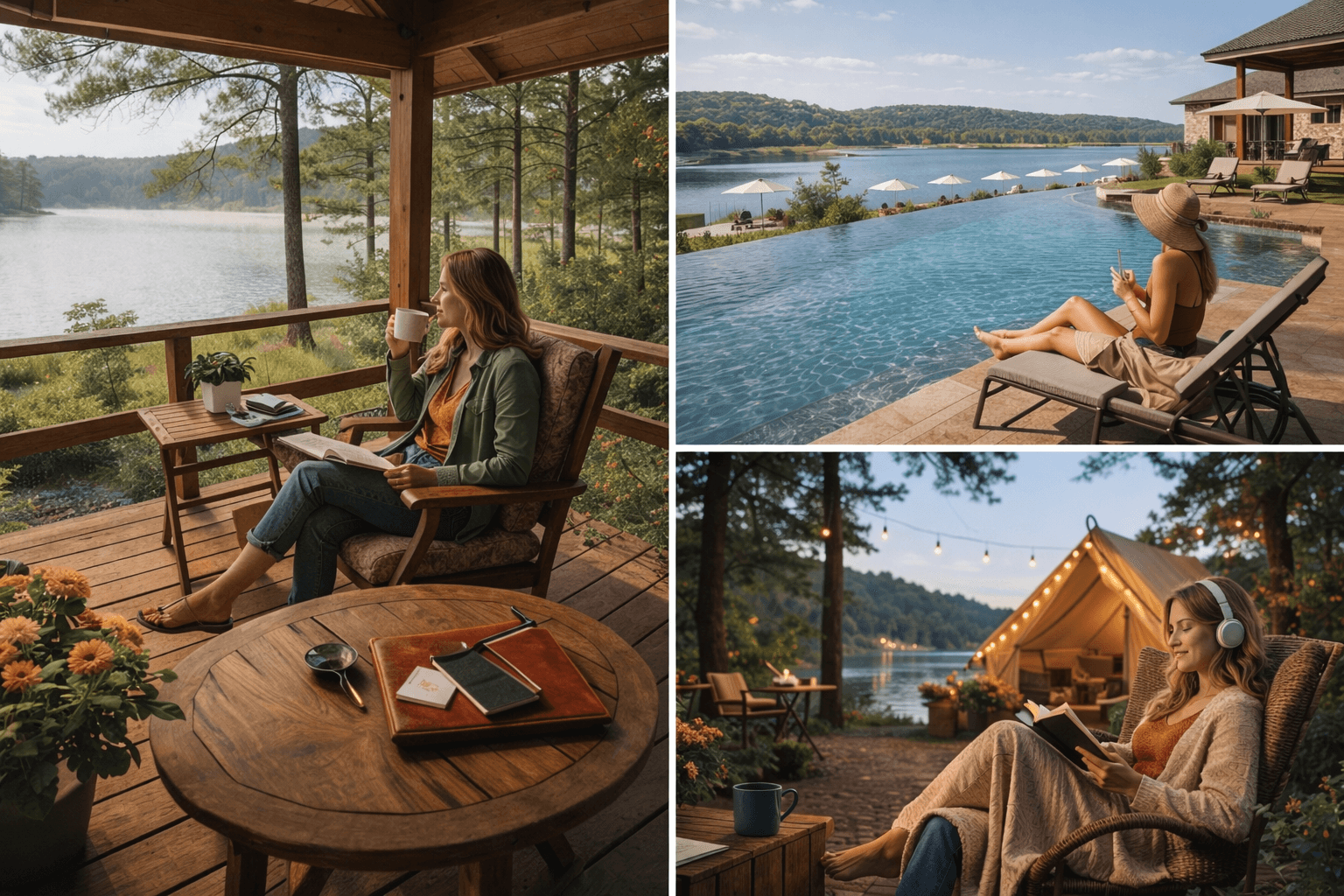
Lakefront stays near Austin offer a kind of weekend escape that feels naturally steady and reassuring, especially for solo women who want space without isolation. Water has a quiet way of slowing your thoughts and softening the pressure to constantly decide what comes next. Instead of navigating crowded attractions or packed schedules, you wake up to open views and gentle rhythms that support calm independence. For many solo travelers, that environment makes it easier to relax into their own company while still feeling held by a contained, welcoming setting.
In this guide, I’ll walk you through how to choose the best lakefront cabins, resorts, and glamping stays near Austin that feel safe, comfortable, and truly solo-woman-friendly. We’ll explore what a real weekend by the water actually feels like, practical comfort and safety habits, packing and budget expectations, and how lake trips quietly build long-term confidence. The goal is to help you picture the experience clearly enough that planning your solo weekend feels grounded, manageable, and genuinely exciting.
Table of Contents
ToggleWhy Lakefront Stays Near Austin Feel Especially Supportive for Solo Women
Lakefront environments tend to regulate your nervous system in a way that few other settings do. The steady presence of water creates a visual anchor that slows internal pacing and softens the constant background decision-making many women carry through the week. When you sit by a lake, watching light shift across the surface, there is no pressure to optimize your time. Activity becomes optional. For solo women leaving Austin, that shift often feels like stepping into a version of the weekend where rest is built into the landscape itself.
I’ve seen many solo women gravitate toward water when they want a trip that feels emotionally safe as well as beautiful. Lakes offer openness without chaos. You are surrounded by space, but the shoreline provides natural boundaries that make the environment feel contained and understandable. That containment matters. It allows solitude to feel intentional rather than isolating, which is often the difference between a restorative solo trip and one that feels uneasy.
Lakefront stays also support a gentle rhythm of movement that never feels demanding. You can walk along the shore, sit with a book, or simply watch the water and still feel engaged with your surroundings. There is a quiet companionship in the sounds of wind and water that softens the edges of being alone.
-
Water views that naturally slow mental pacing and reduce overstimulation.
-
Landscapes that feel open yet contained, supporting emotional safety.
-
Gentle outdoor options that invite movement without pressure.
-
Ambient natural sounds that soften the feeling of solitude.
-
Short drives from Austin that make the escape feel accessible.
For many solo women, lake weekends recalibrate their relationship with quiet. Instead of silence feeling empty, it begins to feel spacious and supportive. That emotional reset often carries back into daily life in Austin, reinforcing the value of choosing destinations that nurture calm confidence.
How to Choose a Solo-Woman-Friendly Lakefront Stay
Choosing the right lakefront stay is less about finding the most photogenic property and more about selecting an environment that supports emotional steadiness from the moment you arrive. For solo women, the first few hours of a trip often determine how quickly the nervous system relaxes. A well-chosen place should feel legible and contained. You should be able to understand the layout, locate help if needed, and settle into your space without friction. When those basics are smooth, the lake becomes a backdrop for rest rather than something you have to manage.
Many solo travelers assume that remoteness equals relaxation, but I’ve seen the opposite pattern play out. What usually feels best is a balance between nature and visible infrastructure. You want to feel connected to the water while knowing there is a quiet support system around you. That balance allows independence to feel steady instead of exposed.
Ideal Driving Distance and Arrival Timing from Austin
Distance shapes your emotional energy more than most people expect. Lakefront stays within roughly one to three hours of Austin tend to offer the best balance between escape and accessibility. You can leave after work or mid-afternoon and still arrive with daylight remaining, which makes orientation much easier.
Arriving before dark allows you to walk the property, understand the shoreline layout, and map your surroundings calmly. That early familiarity reduces background tension and helps the weekend start on steady ground.
-
Driving routes that are straightforward and well-marked.
-
Arrival windows that allow daylight check-in whenever possible.
-
Proximity to small towns for last-minute supplies.
-
Parking areas that feel visible and easy to navigate.
Privacy Versus Gentle Social Energy
Lakefront properties vary widely in their social tone. Some emphasize retreat-like quiet, while others carry a soft community atmosphere. Solo women often feel most comfortable in places where interaction is optional and never expected.
You want enough privacy to inhabit your own rhythm, paired with a subtle sense of nearby presence. Seeing other guests at a distance or knowing hosts are on site can soften the edges of solitude without intruding on it.
-
Private outdoor spaces that allow uninterrupted downtime.
-
Shared areas that never feel crowded or performative.
-
Guest cultures centered on relaxation rather than parties.
-
Property sizes that prevent overstimulation.
Safety and Comfort Cues in Natural Water Settings
Natural settings carry their own rhythms, and small design details quietly influence how safe a place feels. Lighting, defined paths, and stable access to the shoreline all contribute to emotional ease. When movement through the property feels intuitive, your body relaxes faster.
I’ve seen many solo women gain confidence simply from environments that make navigation obvious. Clear boundaries and well-maintained spaces signal care, and care translates into trust.
-
Well-lit walkways near cabins or common areas.
-
Clearly defined paths between lodging and the water.
-
Stable docks or shoreline access points.
-
Visible maintenance that signals active management.
Amenities That Reduce Weekend Friction
Amenities are not luxuries in solo travel. They are supports that remove unnecessary decision-making. When essentials are nearby, you spend less energy managing logistics and more energy enjoying the lake.
Properties that centralize dining, seating, and rest areas tend to feel more nurturing. You are not constantly planning your next move. The environment carries part of that load for you.
-
In-room or nearby restroom facilities.
-
Simple kitchen access or on-site dining options.
-
Comfortable seating oriented toward the water.
-
Climate control that supports restful sleep.
Booking Strategy and Room Placement Tips
Thoughtful booking decisions can quietly shape your entire experience. Choosing rooms with clear sightlines, easy access to common areas, or partial visibility to other guests often increases comfort without sacrificing privacy.
What usually helps most is studying property maps and recent reviews before committing. Solo women often feel steadier when they understand the spatial logic of a place in advance.
-
Rooms located within easy reach of staff or shared spaces.
-
Placement that balances privacy with gentle visibility.
-
Early reservations that allow better room selection.
-
Clear confirmation communication from the property.
When these elements align, a lakefront stay stops feeling like an unknown environment and starts feeling like a temporary sanctuary. That emotional shift is what allows solo women to settle fully into their weekends and experience the water as a source of calm rather than uncertainty.
Best Lakefront Cabins Near Austin for Solo Women
Lakefront cabins often provide the most natural balance between privacy and reassurance. For many solo women, a cabin feels like a personal anchor point. You have a door you can close, a defined space that is yours, and direct access to the outdoors without navigating large shared buildings. That combination allows you to inhabit solitude fully while still feeling supported by an organized property around you.
What usually makes a cabin work well for solo travel is not luxury alone but how the space connects to its surroundings. The best options near Austin are cabins that sit inside well-maintained properties with clear layouts, visible hosts or management, and intuitive access to the shoreline. When the environment feels legible within the first hour, your attention shifts away from logistics and toward rest.
Quiet Cabins Designed for Privacy and Reflection
Cabins built around privacy create the strongest sense of emotional containment. These stays tend to use spacing, landscaping, and orientation to minimize direct sightlines between guests. For solo women, that visual buffer allows you to relax without feeling observed.
Properties around lakes such as Lake Travis and Canyon Lake often feature small cabin clusters where quiet is part of the culture. You can sit on a deck overlooking the water, read, or simply watch the light change without interruption. The environment supports introspection without tipping into isolation.
-
Cabin spacing that reduces direct neighbor visibility.
-
Private decks or porches oriented toward the water.
-
Landscapes that absorb noise and soften activity.
-
Layouts that are easy to understand quickly.
Cabins with Easy Shoreline Access and Walkable Paths
Some lakefront cabins excel because they integrate gentle movement into the experience. Walkable paths to the shoreline and stable access points allow you to explore without complicated navigation. For solo women, this ease of movement builds quiet confidence.
Cabin areas near Inks Lake and along parts of Lake Buchanan are known for compact, walkable layouts. You can step outside and reach the water within minutes, which encourages spontaneous outdoor moments that never feel demanding. The ability to move freely without planning reduces decision fatigue.
-
Clearly defined paths linking cabins to the shoreline.
-
Gentle terrain suitable for casual walking.
-
Stable docks or seating areas near the water.
-
Compact property footprints that feel contained.
Small Host-Run Properties with Personal Support
Host-run cabin properties often feel the most reassuring for solo travelers. When owners live nearby and actively maintain the grounds, the atmosphere carries a sense of care that is immediately perceptible. Solo women frequently describe these spaces as warm rather than transactional.
Around Canyon Lake and smaller Hill Country reservoirs, many cabin properties operate at an intimate scale. Hosts are visible enough to provide support if needed but respectful of privacy. That balance softens the emotional edge of traveling alone.
-
On-site hosts who remain approachable without hovering.
-
Guest counts small enough to maintain quiet.
-
Personal touches that make spaces feel welcoming.
-
Clear communication before and during arrival.
Lakefront cabins succeed for solo women because they combine independence with containment. You inhabit your own space fully while remaining connected to a supportive environment. That balance turns a simple weekend into a steady, confidence-building retreat.
Best Lakefront Resorts Near Austin for Comfort and Services
Lakefront resorts create a different kind of solo experience than cabins. Where cabins emphasize privacy and self-contained space, resorts add a visible layer of hospitality that many solo women find deeply reassuring. You are not managing every detail yourself. Dining, maintenance, and shared spaces are handled for you, which reduces background decision fatigue. That support allows your energy to shift toward rest and enjoyment instead of logistics.
For solo travelers, the strongest lakefront resorts are those that feel human-scaled rather than sprawling. You want environments where staff are visible, layouts are intuitive, and movement between your room and the water feels simple. I’ve seen many solo women relax faster in resorts that centralize amenities and maintain a calm social tone. The lake becomes part of a contained ecosystem that is easy to inhabit.
Resorts with On-Site Dining and Hospitality Support
Resorts that centralize dining and guest services remove one of the most common stress points in solo travel: deciding where and how to eat. When meals are accessible on site, you do not have to navigate unfamiliar towns or drive after dark. That convenience adds a quiet layer of safety and comfort.
Lakefront resorts around Lake Travis and Lake Austin are known for integrating restaurants and lounges into their core layout. You can move from your room to dinner to the shoreline without leaving the property. This proximity simplifies your weekend rhythm and keeps your attention anchored in the environment.
-
On-site restaurants that normalize solo dining.
-
Visible staff presence throughout active hours.
-
Compact layouts that reduce navigation stress.
-
Shared spaces that feel calm rather than crowded.
Spa and Wellness-Focused Lakefront Resorts
Wellness-oriented resorts often create the most nurturing environments for solo women. These properties organize the guest experience around rest, gentle movement, and intentional downtime. Spa facilities anchor the day and provide structure without pressure.
What usually feels best in these settings is the normalization of solitude. Many guests arrive specifically to recharge, which softens any social expectations. You can participate in wellness activities or retreat into privacy without explanation. The lake adds a visual and emotional backdrop that deepens the sense of reset.
-
Spa facilities that support quiet personal pacing.
-
Guest cultures centered on restoration.
-
Outdoor relaxation areas oriented toward the water.
-
Staff trained around attentive but unobtrusive service.
Resorts That Balance Activity with Rest
Some lakefront resorts combine gentle activity with strong comfort infrastructure. They offer optional experiences such as kayaking, guided walks, or yoga while preserving a calm overall tone. For solo women, this balance allows you to explore without committing to high-energy schedules.
Resorts near larger lakes like Travis and Buchanan often provide structured activity menus that remain entirely optional. You can experiment with engagement and return easily to private rest. That flexibility supports fluctuating energy across the weekend.
-
Optional activities designed for beginners.
-
Easy transitions between movement and downtime.
-
Equipment rentals integrated into the property.
-
Environments that respect personal pacing.
Lakefront resorts succeed when they reduce friction without overwhelming you with stimulation. The combination of hospitality and natural scenery creates a setting where independence feels supported rather than solitary. For many solo women, that balance turns a weekend away from Austin into a deeply restorative experience.
Best Lakefront Glamping Stays Near Austin
Lakefront glamping occupies a middle ground between cabins and resorts. You stay close to nature, often in elevated tents or thoughtfully designed structures, but without giving up the comforts that make solo travel feel steady. For many women, glamping removes the friction of traditional camping while preserving the intimacy of sleeping near the water. You wake up immersed in the landscape, yet return at night to a space that feels secure and intentionally designed.
What makes glamping especially appealing for solo travelers is its emotional accessibility. You are not managing complex gear or survival logistics. The environment is curated to feel welcoming and legible from the start. I’ve seen many solo women use glamping as a gentle bridge between indoor and outdoor travel. The lake becomes part of your living space, which deepens the sense of retreat without introducing overwhelm.
Elevated Tents with Comfort-First Amenities
Comfort-focused glamping sites prioritize sleep quality and climate control. Elevated tents with proper bedding, lighting, and stable flooring help your body relax quickly in an unfamiliar environment. For solo women, knowing that the essentials are handled reduces background tension.
Around lakes such as Bastrop and parts of the Hill Country, several glamping properties design their tents to feel more like small studio rooms than campsites. You can hear the water and wind, but your personal space remains contained and predictable.
-
Raised platforms that provide physical stability.
-
Real beds and climate considerations that support rest.
-
Integrated lighting that softens nighttime movement.
-
Layouts that feel intuitive within minutes of arrival.
Luxury Glamping with Strong Privacy
Some lakefront glamping properties lean toward boutique luxury. These sites space units deliberately to preserve privacy while maintaining visible management. For solo women, that spacing allows solitude without isolation.
Luxury glamping near Canyon Lake and Lake Travis often incorporates private decks and screened outdoor areas. You can sit with the water view without feeling exposed to neighboring guests. The design emphasizes containment and quiet.
-
Unit placement that minimizes direct sightlines.
-
Private outdoor areas oriented toward the lake.
-
Landscapes that absorb noise and activity.
-
Clear boundaries that define personal space.
Glamping Communities with On-Site Hosts
Host-supported glamping communities add a reassuring human presence. On-site teams maintain the property and remain accessible if questions arise. This visible care often helps solo women settle faster into the environment.
Properties that operate at a small scale tend to cultivate respectful guest cultures. You share the space with a limited number of travelers, which softens social pressure while preserving a sense of community.
-
On-site hosts who remain approachable and calm.
-
Guest counts small enough to maintain quiet.
-
Shared facilities that are easy to navigate.
-
Communication that feels clear and supportive.
Lakefront glamping works for solo women because it combines immersion with structure. You experience the water and landscape closely while staying anchored in a space designed for comfort. That blend turns an outdoor weekend into something that feels adventurous yet emotionally steady.
What a Solo Weekend by the Lake Actually Feels Like
Many solo women hesitate before booking a lakefront trip because it is difficult to imagine how the weekend will unfold in real time. A solo weekend by the water is rarely packed or dramatic. It follows a gentle rhythm shaped by arrival, quiet exploration, and long stretches of open time. Once you understand that pacing, the experience becomes easier to picture yourself inside. You are not trying to fill every hour. You are letting the lake set the tempo.
What usually feels most surprising is how quickly the environment becomes familiar. Within a few hours of arrival, you know the path to the shoreline, the sound of the water, and the layout of your space. That familiarity reduces background tension. By the end of the first evening, many solo women describe a sense of emotional settling that feels deeper than a typical city weekend.
Friday Arrival and Settling Into the Environment
Friday arrival tends to feel quieter than expected. You check in, bring your belongings into your space, and take a slow walk toward the water. That first walk is less about activity and more about orientation. You notice landmarks, lighting, and how the shoreline curves around the property.
Arriving with daylight allows you to build a mental map calmly. By the time evening approaches, your surroundings feel understandable and contained. This early familiarity anchors the rest of the weekend.
-
Slow arrival that prioritizes orientation over activity.
-
First shoreline walks that build spatial comfort.
-
Evenings centered on rest rather than planning.
Saturday Rhythm of Gentle Activity and Rest
Saturday mornings often begin without alarms. You wake to natural light, prepare coffee or breakfast, and sit with the water before deciding what the day will hold. Some solo women choose light movement such as walking or kayaking, while others remain anchored in quiet reflection.
The middle of the day tends to alternate between engagement and stillness. You might explore briefly and then return to your space to read or rest. The lake provides a constant backdrop that makes transitions feel seamless.
-
Flexible mornings shaped by personal energy.
-
Optional activities that never feel mandatory.
-
Natural pauses that encourage rest.
Evening Atmosphere and Waterfront Quiet
Evenings by the lake carry a distinct calm. As light fades, sound softens and activity slows. Many solo women use this time for simple rituals such as journaling, watching the sunset, or sitting outside with a warm drink.
This period often becomes the emotional center of the weekend. Without external pressure, attention turns inward in a supportive way. Solitude feels intentional and restorative rather than empty.
-
Soft evening environments that support reflection.
-
Personal rituals that anchor the end of the day.
-
Quiet shared spaces that feel safe and steady.
Sunday Departure and Emotional Reset
Sunday mornings tend to feel reflective rather than rushed. You pack slowly, revisit the shoreline, and prepare for the drive back to Austin. Because the distance is manageable, departure rarely feels abrupt.
During the return trip, many solo women notice a quiet sense of accomplishment. The weekend did not demand extreme effort, yet it expanded your comfort zone in tangible ways.
-
Unhurried packing that preserves calm.
-
Familiar spaces that feel easier than on arrival.
-
Reflective drives that reinforce confidence.
Understanding this flow transforms a lakefront weekend from an abstract idea into a lived sequence you can imagine inhabiting. Once the rhythm feels clear, booking the trip becomes less intimidating and more inviting.
Practical Comfort and Safety Habits for Solo Women at Lakefront Stays
Comfort and safety at lakefront properties are rarely about dramatic precautions. They are built through small, repeatable habits that create a steady sense of control in natural environments. Most organized lakefront stays near Austin are designed to feel welcoming and navigable, but your personal routines still shape how quickly you relax. When those routines become automatic, your attention shifts away from monitoring your surroundings and toward enjoying the water.
I’ve seen many solo women discover that confidence grows fastest when safety habits feel integrated rather than reactive. The goal is not hyper-vigilance. It is quiet awareness. You want to understand your environment well enough that movement feels intuitive and your body can settle fully into rest.
Navigating Natural Spaces with Confidence
Natural settings can feel expansive at first, especially around water. Taking time to orient yourself early reduces uncertainty and helps you move through the property naturally. A short daylight walk to map paths, lighting, and shoreline access often sets the tone for the entire weekend.
When you know how spaces connect, nighttime movement becomes less intimidating. Familiarity transforms the environment from unknown to understood.
-
Walking the property shortly after arrival to build a mental map.
-
Noticing lighting patterns and shoreline boundaries.
-
Identifying the easiest routes between key areas.
-
Memorizing landmarks that anchor orientation.
Communication and Check-In Routines
Light communication habits create reassurance without tethering you to constant updates. A simple arrival message and occasional check-in are usually enough to maintain connection while preserving independence.
Many solo women find that sharing general timelines rather than precise tracking supports both safety and emotional freedom.
-
Sending a brief arrival confirmation to a trusted contact.
-
Sharing broad weekend plans instead of live locations.
-
Saving property contact details offline.
-
Keeping your phone charged during outings.
Water Boundaries and Personal Comfort
Being near water introduces its own rhythm and boundaries. Respecting your comfort level around swimming, boating, or shoreline exploration is part of solo travel confidence. You are never required to engage beyond what feels steady.
Listening to your body matters more than matching anyone else’s pace. Gentle interaction with the lake is often enough to feel connected.
-
Choosing activities that match your experience level.
-
Staying aware of changing weather conditions.
-
Keeping a comfortable distance from unstable edges.
-
Trusting your instinct about when to step back.
Nighttime Comfort and Security Awareness
Night routines reinforce a sense of containment. Simple habits repeated consistently help your mind transition into rest. Most nighttime discomfort comes from unfamiliarity rather than real risk.
Creating predictable evening rituals signals to your body that the environment is safe enough to relax.
-
Securing doors or tent closures before sleep.
-
Keeping essentials within easy reach.
-
Adjusting lighting to create a calm atmosphere.
-
Establishing a consistent wind-down routine.
These practices do not add tension to your weekend. They quietly support it. When comfort and safety habits become routine, lakefront solo travel shifts from something you manage to something you inhabit with ease.
Packing for a Lakefront Weekend Near Austin
Packing for a lakefront weekend is less about bringing more and more about bringing the right things to support a calm rhythm. When your bag is aligned with how you actually want to spend your time, transitions feel smoother and your attention stays on the experience rather than missing items. For solo women traveling from Austin, lake weather can shift between warm sun, breezy afternoons, and cooler evenings, so flexibility matters more than volume.
I’ve seen many solo travelers feel an immediate sense of ease when their packing supports simple routines. You want clothing and essentials that let you move easily between the shoreline, your lodging, and quiet evenings without constant outfit changes. The goal is not to prepare for every scenario. It is to remove friction from the moments that repeat throughout the weekend.
Clothing That Transitions from Water to Evening
Lakefront trips blur the line between casual and restful. Clothing that layers well allows you to adjust to changing temperatures without overthinking your wardrobe. Comfort should lead every decision.
-
Breathable daytime outfits that handle sun and movement.
-
Light layers for breezy afternoons and evenings.
-
Comfortable shoes suitable for walking near water.
-
Sleepwear that feels familiar and cozy.
Personal Comfort Items That Elevate the Stay
Small personal items can transform unfamiliar spaces into temporary retreats. These comforts anchor you emotionally and help your body settle faster.
-
Favorite skincare or self-care products from home.
-
A book or journal for quiet downtime.
-
Snacks or tea that support evening rituals.
Tech and Communication Essentials
Technology should support independence without dominating attention. Reliable basics keep logistics smooth and reduce background worry.
-
Portable charger for extended battery life.
-
Headphones for personal quiet space.
-
Secure storage for identification and valuables.
Optional Lake-Specific Gear
A few lake-focused additions can deepen your connection to the environment, but they are optional rather than required. Choose only what aligns with how you want to spend your time.
-
Swimwear if you plan to enter the water.
-
Sun protection such as hats or lightweight covers.
-
A small bag for shoreline walks.
Packing with intention creates a steady foundation for the weekend. When your essentials match your plans, lakefront travel feels fluid and unforced, allowing you to focus on rest and quiet exploration.
Budget Expectations for Lakefront Weekends from Austin
Lakefront weekends near Austin can range from modest to indulgent, but most solo trips fall into a predictable structure once you understand where money typically goes. The main categories are accommodation, food, transportation, and optional activities. When you outline these ahead of time, spending feels intentional rather than surprising. That clarity removes a quiet layer of stress and allows you to focus on the experience itself.
What usually feels best is aligning your budget with comfort rather than chasing the lowest possible price. I’ve seen many solo women enjoy their trips more when they invest strategically in the elements that affect rest, such as sleep quality or easy dining access. A clear budget is not about restriction. It is about creating a framework that supports ease.
Cabin, Resort, and Glamping Price Differences
Different types of lakefront stays carry distinct pricing patterns. Cabins are often the most flexible in cost, while resorts and higher-end glamping lean toward premium tiers. Seasonal timing also influences rates, especially during spring and early fall around Austin.
-
Cabins that offer moderate pricing with strong privacy.
-
Resorts that bundle services into higher nightly rates.
-
Glamping stays that sit between cabins and resorts.
-
Seasonal fluctuations during peak travel periods.
Food and Activity Spending
Food costs depend largely on how you structure your days. On-site dining adds convenience, while simple groceries allow more control over spending. Optional lake activities can remain minimal or expand depending on your interests.
-
On-site restaurant meals that trade cost for convenience.
-
Simple grocery planning that keeps budgets predictable.
-
Optional rentals or guided activities that add variety.
Transportation and Hidden Costs
Most lakefront destinations near Austin are reachable by car, which keeps transportation straightforward. Small contingency funds help absorb incidental expenses that may arise.
-
Fuel costs based on short regional drives.
-
Parking or service fees when applicable.
-
Emergency buffers for flexibility.
Where Investing More Improves Comfort
Some expenses deliver disproportionate emotional return. Investing in the areas that affect sleep, safety, and convenience often elevates the entire weekend.
-
Higher-quality rooms that enhance rest.
-
Dining access that reduces nighttime driving.
-
Amenities that centralize relaxation.
Understanding these layers turns budgeting into a supportive tool rather than a constraint. When finances feel predictable, committing to a lakefront weekend becomes easier and more enjoyable.
How Lakefront Weekends Build Solo Travel Confidence
Lakefront trips act as quiet training grounds for solo travel. They expose you to new environments while maintaining a steady sense of containment. Each weekend teaches small lessons in navigation, pacing, and self-trust. These lessons accumulate gradually and reinforce your ability to move through unfamiliar spaces with calm.
I’ve seen many solo women return from lake weekends with a subtle shift in how they view their own independence. Managing a trip alone, even a gentle one, creates tangible proof of capability. That confidence often carries into other forms of travel and daily life.
-
Repeated exposure to new settings builds adaptability.
-
Positive solo experiences counter anxious expectations.
-
Emotional resilience grows through steady independence.
The confidence gained from these trips is not dramatic. It is durable. Each successful weekend widens your comfort zone and makes future adventures feel increasingly approachable.
Final Thoughts
Lakefront stays near Austin offer solo women a rare blend of openness and reassurance. You step into environments shaped by water and quiet while remaining close enough to home to feel grounded. That balance allows solitude to feel intentional and restorative rather than uncertain.
If you have been considering a solo weekend by the lake, the most important step is choosing a setting that supports both comfort and curiosity. When the environment feels steady, the trip becomes less about managing fear and more about discovering how naturally capable you already are.
Related Posts
- Luxury Solo Female Weekend Getaways from Austin (Calm, Indulgent, and Effortlessly Safe)
- Fredericksburg Solo Female Weekend Guide from Austin
- Best Brunch Spots Near Austin for Solo Women Who Want a Calm, Comfortable Weekend Morning
- Packing Checklist for Solo Female Weekend Trips from Austin
- Local Food Experiences for Solo Female Travelers Near Austin
- Small Towns Near Austin That Feel Comfortable for Solo Female Travelers
- Solo Female Safety Tips for Weekend Trips Around Austin
- How to Tell If a Weekend Trip Is Right for Solo Female Travel