
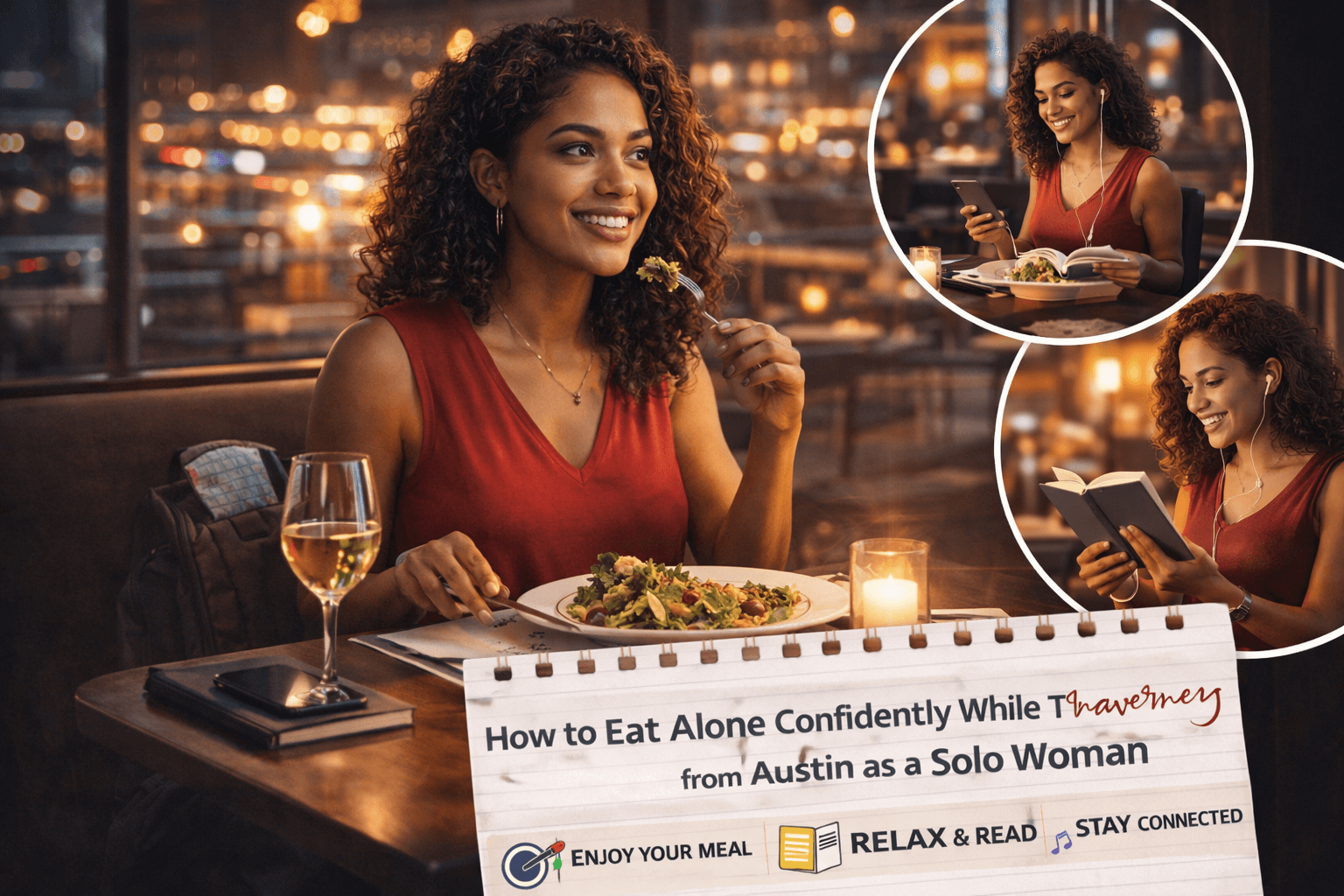
Eating alone is one of the moments that can feel unexpectedly vulnerable during a solo weekend trip from Austin. You might feel perfectly confident booking the trip and exploring a new place, but the idea of sitting at a table by yourself can trigger a sharp wave of self-consciousness. I’ve seen many solo women worry that others will notice them, judge them, or see their aloneness as something unusual. That spotlight feeling can make a simple meal seem emotionally bigger than it is.
This guide is a calm, practical framework for eating alone with steady confidence while traveling. We’ll unpack why solo dining feels so exposed, how to reframe it as a learnable skill, and the mindset shifts and simple scripts that quiet anxious thoughts in real time. By the end, you’ll have tools to walk into restaurants from Austin to anywhere you travel with a grounded sense of ease, so meals become restorative parts of your trip instead of moments to dread.
Table of Contents
ToggleWhy Eating Alone Feels So Exposed During Solo Travel
Eating alone in public touches something deeper than hunger. Meals are culturally framed as social rituals, so when you sit down by yourself in an unfamiliar place, it can feel like you’re stepping outside an invisible script. I’ve seen many solo women feel surprisingly exposed in restaurants, even when they are comfortable being alone in other settings. The combination of travel, visibility, and social expectation can briefly magnify self-awareness.
What makes this moment intense is not that others are watching closely, but that your attention is turned sharply inward. You become hyperaware of your posture, your movements, and how you might appear. Understanding why this happens helps you soften the experience instead of interpreting it as a personal flaw.
The Psychology of Being Seen in Public Alone
Humans are wired to monitor social belonging. When you dine alone, your brain temporarily flags the situation as socially ambiguous. It asks quiet questions about how you fit into the environment, and that questioning creates a sense of exposure.
This psychological response often includes:
-
Heightened Awareness Of Your Own Body And Movements
-
Sensitivity To Where Others Are Looking
-
A Subtle Fear Of Standing Out From The Crowd
-
Increased Internal Commentary About Your Appearance
These reactions are normal social reflexes, not signs that you’re doing anything wrong. Your brain is scanning for belonging cues in a visible setting.
How Social Norms Shape Solo Dining Anxiety
Cultural expectations reinforce the idea that restaurants are group spaces. Even though solo diners are common, many environments still visually emphasize pairs or groups. That contrast can make your aloneness feel more noticeable than it actually is.
Social norms influence anxiety through:
-
Restaurant Layouts That Highlight Multi-Person Tables
-
Media Images That Associate Dining With Companionship
-
Internalized Beliefs About What Meals “Should” Look Like
-
Early Experiences That Linked Eating To Social Bonding
When you recognize these influences, you can see that your discomfort is partly inherited from culture, not created by your individual choice.
The Gap Between Perception and Reality
The most important truth about solo dining is that the spotlight effect is largely internal. Other people are usually absorbed in their own conversations and meals. I’ve seen many solo women realize that once they settle in, the imagined scrutiny fades quickly.
The perception-reality gap often looks like:
-
Assuming Others Are Watching More Than They Are
-
Interpreting Neutral Glances As Judgment
-
Forgetting How Focused People Are On Their Own Experience
-
Underestimating How Common Solo Diners Actually Are
When you understand this gap, the intensity of exposure softens. Eating alone becomes less about performance and more about presence.
Reframing Solo Dining as a Skill, Not a Test
One of the biggest shifts that makes solo dining easier is seeing it as a learnable skill instead of a personal exam. When you treat eating alone as a test of confidence, every small awkward moment feels like failure. I’ve seen many solo women walk into restaurants already grading themselves on how relaxed they look. That pressure makes the experience heavier than it needs to be.
A skill-based mindset is gentler and more practical. Skills improve with repetition, not perfection. Each solo meal during your weekend trip from Austin becomes a small practice session in being comfortable in your own presence. Some meals will feel smooth. Others may feel slightly awkward. Both are part of learning.
Moving from Self-Consciousness to Self-Companionship
Self-consciousness centers on how you appear to others. Self-companionship shifts your attention to how you are experiencing the moment. When you eat with a sense of companionship toward yourself, the table stops feeling like a stage and starts feeling like a place to land.
This shift becomes easier when you:
-
Treat The Meal As Time Spent With Yourself Rather Than A Social Performance
-
Notice The Environment With Curiosity Instead Of Self-Monitoring
-
Allow Silence Without Feeling Required To Fill It
-
Focus On Taste, Texture, And Atmosphere
These small adjustments redirect your energy outward and inward in a balanced way. You are participating in the space, not defending your presence in it.
Treating Meals as Anchors in Your Travel Day
Meals can function as emotional anchors during solo travel. They create natural pauses where your nervous system can reset. When you see dining as nourishment and rest rather than exposure, its role in the day changes.
A grounded approach to travel meals often includes:
-
Scheduling Meals As Gentle Breaks Between Activities
-
Choosing Restaurants That Match Your Energy Level
-
Allowing Extra Time So You Don’t Feel Rushed
-
Viewing Dining As A Moment Of Restoration
What usually feels best is letting meals punctuate your weekend with calm structure. They become reliable points of stability.
Normalizing the Learning Curve
Confidence with solo dining rarely appears overnight. Most women experience a gradual easing of discomfort as familiarity grows. I’ve seen many solo travelers feel noticeably more relaxed by their third or fourth solo meal.
The learning curve often looks like:
-
Initial Heightened Awareness That Softens With Repetition
-
Small Moments Of Awkwardness That Become Less Charged
-
Growing Comfort With Quiet Observation
-
Increased Ability To Stay Present During The Meal
Normalizing this progression removes pressure. You are not trying to eliminate discomfort instantly. You are allowing your nervous system to adapt at its own pace.
Reframing solo dining as a skill transforms the experience from judgment into practice. Each meal becomes an opportunity to build steadiness rather than prove something about yourself.
Choosing Restaurants That Support Confident Solo Dining
Not all restaurants create the same emotional experience for a solo diner. Some spaces naturally make it easier to relax, while others amplify self-consciousness. I’ve seen many solo women assume their discomfort comes entirely from within, when in reality the environment plays a huge role. Choosing restaurants intentionally is not avoidance. It’s smart scaffolding while you build confidence.
When you match the setting to your comfort level, solo dining starts to feel smoother and more predictable. You’re reducing unnecessary friction so your attention can stay on enjoying the meal rather than managing anxiety.
Environments That Feel Naturally Solo-Friendly
Certain restaurant styles are structurally more welcoming to people eating alone. These places normalize solo presence through layout and atmosphere.
Solo-friendly environments often include:
-
Cafés And Casual Spots Where People Commonly Work Or Read Alone
-
Restaurants With Bar Seating Or Communal Counters
-
Smaller Spaces With A Calm, Unhurried Pace
-
Places Where Ordering At A Counter Is Normal
In these settings, being alone blends into the environment. You are one of many independent diners rather than an exception.
Timing Your Meals for Comfort
Timing can dramatically change how exposed a restaurant feels. Peak dining hours tend to amplify noise and social density, which can heighten self-awareness. Quieter windows often create a softer emotional landing.
Comfortable timing strategies include:
-
Eating Slightly Before Or After The Main Rush
-
Choosing Late Lunch Or Early Dinner Slots
-
Visiting Popular Places During Off-Peak Hours
-
Allowing Flexibility Instead Of Rushing To Prime Times
These adjustments don’t diminish the experience. They shape it to support your emotional state.
Seating Choices That Reduce Pressure
Where you sit influences how visible and settled you feel. Strategic seating can quietly reduce anxiety without drawing attention.
Helpful seating preferences often involve:
-
Sitting At The Bar Or Counter When Available
-
Choosing A Table With A View Of The Room Or Outside
-
Avoiding Highly Central Spotlight Positions If They Feel Intense
-
Selecting Corners Or Edges That Provide Gentle Containment
These choices are about comfort, not hiding. You are designing a space where your nervous system can relax.
When you choose restaurants and seating thoughtfully, solo dining becomes an environment you collaborate with rather than endure. That partnership makes confidence easier to access.
Simple Mental Scripts to Quiet Self-Conscious Thoughts
Even when you choose a comfortable restaurant, your mind may still generate a running commentary about how you look or what others might think. Mental scripts are short, steady phrases you can return to when self-conscious thoughts start looping. I’ve seen many solo women feel immediate relief once they have language ready for these moments. Scripts don’t silence anxiety by force. They gently redirect your attention toward steadiness.
The purpose of a script is not to convince yourself of something dramatic. It’s to create a calm internal voice that counters exaggerated fears. With repetition, these phrases become familiar anchors you can access automatically.
Internal Scripts for Walking In Alone
The first few seconds of entering a restaurant often carry the most emotional charge. A prepared script helps you cross that threshold with intention instead of hesitation.
Helpful entry scripts include:
-
I Am Allowed To Take Up Space Here Like Anyone Else
-
Eating Alone Is Normal And Common
-
I Am Here To Nourish Myself, Not To Perform
-
Most People Are Focused On Their Own Meals
Repeating one of these quietly as you walk in steadies your posture and pace. Your body follows the tone of your thoughts.
Scripts for Ordering and Interacting with Staff
Interacting with staff can feel awkward if you’re preoccupied with being alone. A simple conversational script restores ease and keeps the exchange grounded.
Supportive interaction scripts might be:
-
A Calm Greeting Followed By A Clear Order
-
A Polite Thank You Without Over-Explaining
-
Speaking At A Comfortable, Unhurried Pace
-
Remembering That Solo Diners Are Routine For Staff
These reminders normalize the interaction. You are participating in a familiar exchange, not an unusual event.
Redirecting Attention When You Feel Observed
Moments of perceived observation can spike self-awareness mid-meal. A redirection script helps you shift focus back to the experience in front of you.
Effective redirection phrases include:
-
I Am Here To Enjoy This Meal, Not To Monitor Myself
-
My Attention Belongs To The Food And Atmosphere
-
Being Seen Is Not The Same As Being Judged
-
I Can Return To My Senses At Any Time
These scripts act like gentle course corrections. They bring your awareness back to taste, sound, and texture.
Mental scripts are small tools, but they accumulate power through repetition. Each time you use one, you reinforce a calmer internal narrative that supports confident solo dining.
Body Language and Micro-Habits That Signal Confidence
Confidence during solo dining is communicated as much through your body as through your thoughts. You don’t have to perform exaggerated poise. In fact, the most convincing confidence looks ordinary and relaxed. I’ve seen many solo women try to act confident in big ways, when what actually helps is a collection of small, steady micro-habits that calm the nervous system and create a sense of belonging in the space.
Your body and mind constantly influence each other. When your posture and movements are grounded, your thoughts tend to follow. These habits are not about impressing anyone. They are about giving your body cues that say, I am settled here.
Entering and Sitting with Calm Presence
The way you enter and take your seat sets the emotional tone for the meal. Rushing or hesitating amplifies self-awareness, while steady movement communicates ease to your own nervous system.
Calming entry habits include:
-
Walking At A Natural, Unhurried Pace
-
Making Brief Eye Contact With Staff And Offering A Small Smile
-
Sitting Down Fully Instead Of Hovering Or Adjusting Repeatedly
-
Placing Your Belongings Neatly Without Apology
These actions create a sense of intentional arrival. You are occupying the space, not negotiating permission to be there.
Using Small Anchoring Actions at the Table
Once seated, subtle anchoring actions help your body settle. These micro-movements focus your attention on the physical experience of dining rather than on imagined observation.
Helpful table anchors include:
-
Resting Both Feet Flat On The Floor
-
Taking A Slow Breath Before Opening The Menu
-
Placing Your Hands Gently On The Table Instead Of Fidgeting
-
Noticing The Weight Of Your Chair And Surroundings
These cues bring you back into your body. Grounded posture reduces mental drift.
Managing Your Phone Without Hiding Behind It
Phones can be useful companions during solo meals, but hiding behind them can reinforce the feeling that you need protection. I’ve seen many solo women feel more confident when they use their phones intentionally rather than defensively.
Balanced phone habits often look like:
-
Glancing At Your Phone Briefly Instead Of Constant Scrolling
-
Alternating Between Screen Time And Observing The Room
-
Using The Phone As A Tool, Not A Shield
-
Allowing Moments Of Simply Sitting Without Distraction
This balance signals to yourself that you are comfortable being present.
When your body language and micro-habits align with calm presence, solo dining starts to feel natural rather than performative. You are not acting confident. You are practicing steadiness in small, repeatable ways.
What to Do If Anxiety Spikes Mid-Meal
Even with preparation and supportive habits, there may be moments when a sudden wave of anxiety rises while you’re sitting at the table. It can feel sharp and disproportionate, as if everyone can see your discomfort. I’ve seen many solo women interpret this spike as proof that they shouldn’t be eating alone. In reality, mid-meal anxiety is usually a brief nervous system surge, not a meaningful verdict about your ability to dine solo.
The key is responding in ways that stabilize your body first, then gently redirect your attention. You don’t need to escape the restaurant or force yourself to feel confident instantly. You only need to lower the intensity of the moment enough to keep going.
Grounding Yourself Without Leaving the Table
You can calm your nervous system discreetly without drawing attention. Grounding works best when it’s subtle and physical.
Helpful at-table grounding actions include:
-
Pressing Your Feet Firmly Into The Floor For A Few Seconds
-
Taking A Slow Breath With A Longer Exhale Than Inhale
-
Gently Relaxing Your Shoulders And Jaw
-
Feeling The Texture Of The Table Or Utensils
These small actions signal safety to your body. Anxiety often softens once your physiology steadies.
Resetting Your Focus Through Sensory Attention
When anxiety spikes, your attention narrows around self-conscious thoughts. Expanding it back into your senses reduces that tunnel vision.
You can reset your focus by:
-
Noticing The Flavor And Temperature Of Your Food
-
Listening To Ambient Sounds Without Labeling Them
-
Observing Colors And Movement In The Room
-
Feeling The Rhythm Of Your Breathing
This sensory shift reconnects you to the present moment. Your mind has less room to spiral.
Finishing the Meal with Self-Compassion
If anxiety lingers, the most important step is treating yourself kindly instead of judging the experience. I’ve seen many solo women strengthen their confidence by finishing the meal gently rather than forcing perfection.
A compassionate finish might involve:
-
Slowing Your Pace Instead Of Rushing To Leave
-
Acknowledging That Anxiety Happens To Many People
-
Congratulating Yourself For Staying Present
-
Viewing The Meal As Practice Rather Than Performance
Self-compassion prevents one difficult moment from coloring the entire experience. Each completed meal becomes evidence of resilience.
Responding calmly to a mid-meal spike teaches your nervous system that you can handle discomfort without retreating. Over time, these handled moments accumulate into genuine confidence.
How Solo Dining Strengthens Overall Travel Confidence
Eating alone is rarely just about the meal. It quietly trains skills that ripple through the rest of your solo weekend trip from Austin. I’ve seen many women notice that once solo dining feels easier, other parts of travel begin to feel lighter too. That’s because you’re practicing visibility, independence, and emotional regulation in a concentrated setting.
Each time you sit down alone and stay present, you are teaching your nervous system that you can occupy space without apology. That lesson carries into navigation, conversations, and spontaneous decisions. Solo dining becomes a small laboratory for confidence that extends far beyond the table.
Building Tolerance for Visibility
One of the hidden benefits of eating alone is learning to tolerate being seen without shrinking. Restaurants are social spaces, which makes them ideal places to practice calm visibility.
This tolerance grows when you:
-
Allow Yourself To Sit Comfortably Without Constant Self-Monitoring
-
Notice That Attention From Others Is Brief And Neutral
-
Experience Moments Of Ease While Being Observed
-
Realize That Visibility Does Not Equal Judgment
With repetition, being seen becomes ordinary instead of charged.
Turning Meals into Moments of Independence
Solo meals are concrete reminders that you can meet your own needs. You are choosing where to go, what to order, and how to pace your time. I’ve seen many solo women feel a quiet pride after finishing a meal alone, even if it felt challenging at first.
These moments reinforce independence by:
-
Demonstrating Your Ability To Care For Yourself In Public Spaces
-
Creating Small Wins That Build Emotional Momentum
-
Linking Nourishment With Self-Trust
-
Marking The Day With Intentional Pause
Each meal becomes a checkpoint of capability.
Carrying the Skill Back Home
The confidence you build while traveling doesn’t stay on the road. It follows you back to everyday life in Austin. Women who practice solo dining on trips often find it easier to eat alone locally, attend events independently, or enjoy their own company in new settings.
You may notice this carryover as:
-
Greater Comfort Entering Spaces Alone
-
Reduced Fear Of Social Judgment
-
Increased Willingness To Try New Experiences
-
Stronger Internal Steadiness During Quiet Moments
Solo dining becomes part of a broader pattern of self-reliance.
Final Thoughts: Eating Alone Is a Practice in Self-Trust
Eating alone while traveling is not a personality trait you either have or don’t have. It is a practice. I’ve seen many solo women transform their relationship with solo dining through repetition and patience. What once felt exposed begins to feel ordinary, even peaceful.
The goal is not to eliminate every flicker of self-consciousness. It’s to build trust in your ability to stay with yourself when it appears. Each meal you complete adds another layer of familiarity. Over time, the restaurant table becomes less of a stage and more of a resting place.
Solo travel is full of moments that ask you to rely on your own presence. Eating alone is one of the clearest invitations to do that gently. When you accept it as practice rather than performance, confidence grows quietly and steadily.
Related Posts
- Best Farm and Ranch Stays Near Austin for Solo Women Traveling Alone
- Social vs Quiet Solo Weekend Trips from Austin For Women
- Best Solo-Friendly Cafés and Quiet Places Near Austin for Women Who Need a Calm Recharge
- Texas Hill Country Weekend Trips from Austin for Solo Women
- Solo Female Safety Tips for Weekend Trips Around Austin
- Summer Weekend Trips from Austin for Solo Women Who Want Calm, Heat-Safe Escapes
- Photography Spots Near Austin for Solo Female Travelers
- Pet-Friendly Solo Weekend Trips from Austin for Women Traveling with a Dog