
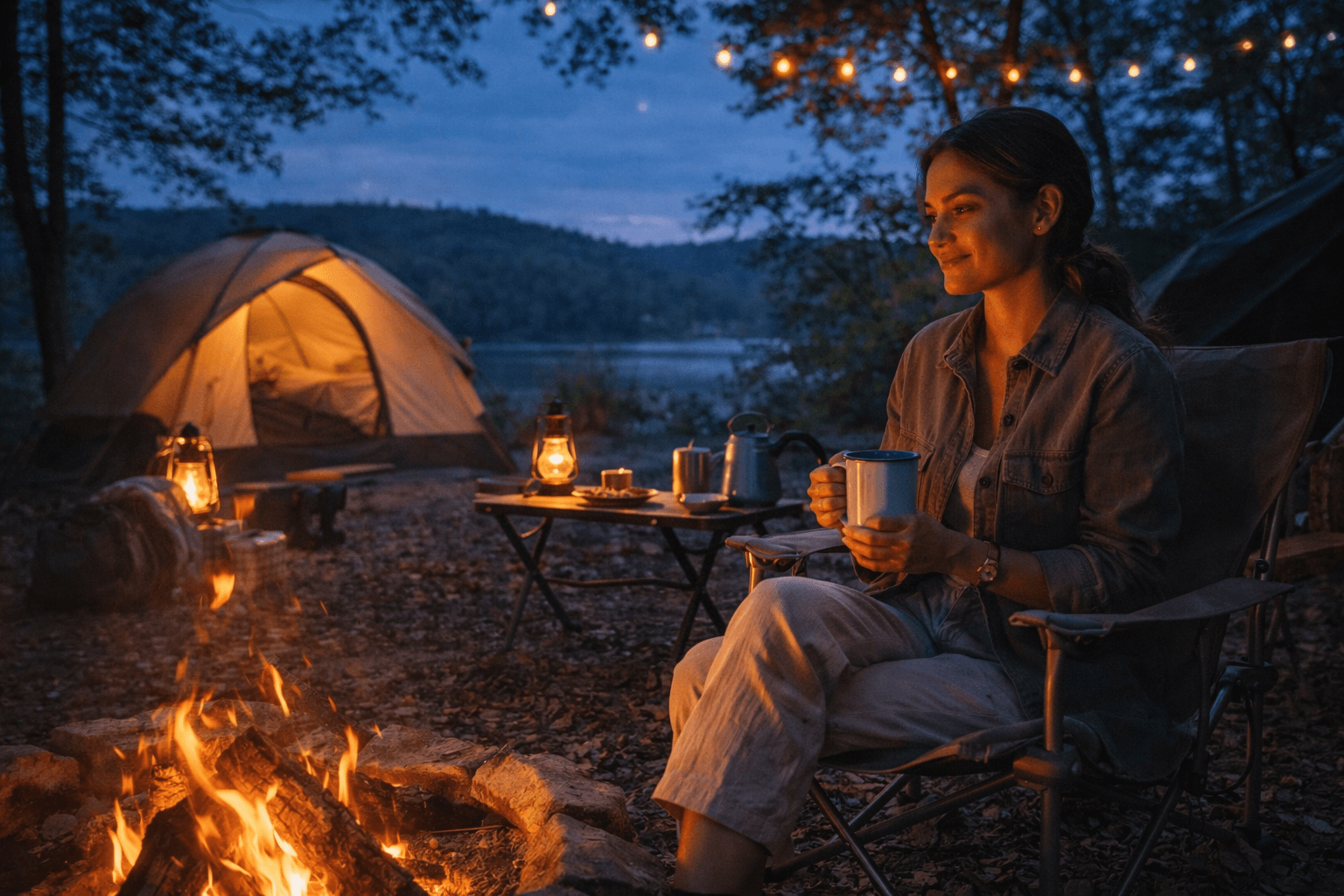
Camping alone near Austin has a way of quieting the noise that builds up during a busy week. For many solo women, a well-chosen campground offers a rare mix of independence and reassurance. You get the freedom of sleeping under open skies or in a simple cabin, but within an organized environment that feels contained and navigable. That balance is what makes campground weekends especially approachable. They offer a gentle entry into outdoor solo travel without demanding extreme skills or pushing you far beyond your comfort zone.
In this guide, I’ll walk you through how to choose campgrounds near Austin that genuinely feel safe and supportive for solo women, from car camping sites to cabin options that add extra comfort. We’ll cover what the weekend rhythm actually looks like, practical safety habits, packing and budget expectations, and how camping builds confidence over time. The goal is to help you picture the experience clearly enough that planning your first or next solo camping trip feels calm, steady, and realistic.
Table of Contents
ToggleWhy Camping Can Feel Empowering for Solo Women from Austin
Camping introduces a kind of independence that feels different from hotel travel. You are not just visiting a place; you are actively shaping your environment and rhythm. For many solo women leaving Austin, that shift creates a quiet sense of ownership over the weekend. You choose when to wake up, how to spend your daylight hours, and how to structure your evenings. There is no performance, no itinerary pressure, and no expectation to keep pace with anyone else. That autonomy is often where empowerment begins.
At the same time, organized campgrounds soften the edges of wilderness travel. You are not disappearing into remote backcountry. You are stepping into a shared outdoor space with visible infrastructure, nearby staff, and other campers moving through similar routines. This creates a feeling of contained adventure. The experience stretches your comfort zone just enough to feel meaningful, but not so far that it becomes overwhelming.
-
Camping creates independence through simple daily decisions you control.
-
Organized campgrounds offer structure that reduces solo travel anxiety.
-
Outdoor settings naturally slow your pace and quiet mental noise.
-
Shared spaces provide soft social presence without pressure.
-
Short drives from Austin make the experience feel accessible and reversible.
Another reason camping resonates with solo women is how it recalibrates your relationship with solitude. In a campground, being alone rarely feels isolating. There is ambient life around you: distant conversations, footsteps on gravel, the rhythm of nature. That background presence allows solitude to feel intentional rather than empty. Many first-time solo campers notice a steady confidence growing as the weekend unfolds. You solve small problems, navigate unfamiliar settings, and realize that you are capable of more than you assumed.
This empowerment does not come from dramatic adventure. It comes from repeated moments of quiet competence. Setting up camp, preparing a simple meal, or walking a trail alone builds trust in your own judgment. When you return to Austin, that trust lingers. Camping becomes less about escaping the city and more about strengthening your sense of self within it.
How to Choose a Solo-Woman-Friendly Campground Near Austin
Choosing the right campground shapes almost everything about your weekend. For solo women, the goal is not to find the most remote or dramatic landscape. It is to select a place where the environment supports calm independence. A good campground should feel organized, visible, and easy to understand within the first hour of arrival. When layout and amenities make intuitive sense, your nervous system relaxes faster, and the trip starts on steady ground.
Many first-time solo campers assume safety comes from isolation, but the opposite is usually true. Campgrounds that feel most supportive tend to have clear infrastructure, regular staff presence, and a predictable flow of activity. You want to feel tucked into nature, not hidden from the world. The right choice balances accessibility from Austin with a sense of escape that still feels manageable.
Ideal Driving Distance and Arrival Timing
Distance influences emotional comfort more than most travelers expect. A campground within one to two hours of Austin allows you to leave after work and arrive with daylight to spare. Seeing your surroundings clearly on arrival reduces uncertainty and makes setting up camp feel straightforward.
-
One-to-two-hour drives that prevent arrival fatigue.
-
Routes with simple highways and minimal rural confusion.
-
Daylight check-in windows that support calm setup.
-
Close proximity to small towns for backup supplies.
Campground Layouts That Support Safety and Comfort
The physical design of a campground quietly affects how secure you feel. Loop-style layouts with visible neighboring sites tend to feel more reassuring than scattered, isolated placements. Walkable paths and clear signage also reduce the stress of navigating unfamiliar terrain.
-
Loop or clustered site designs with natural visibility.
-
Clear signage that makes orientation easy.
-
Campsites spaced for privacy but not isolation.
-
Walkable paths connecting facilities and common areas.
Amenities That Matter More Than You Think
Amenities are not luxuries in solo camping. They are practical supports that increase comfort and reduce friction. Clean restrooms, reliable lighting, and accessible water sources all contribute to emotional ease.
-
Well-maintained restrooms and shower facilities.
-
Consistent lighting near common areas.
-
Accessible water stations close to campsites.
-
Ranger stations or staffed entrances.
Crowd Type and Weekend Atmosphere
Every campground develops a social personality. Some attract families and quiet nature travelers, while others lean toward party energy. Solo women often feel most comfortable in places known for calm, respectful atmospheres.
-
Campgrounds with family-oriented or nature-focused reputations.
-
Sites that discourage loud nighttime gatherings.
-
Environments that attract hikers and outdoor enthusiasts.
-
Balanced occupancy that avoids overcrowding.
Reservation Strategy for Solo Travelers
Thoughtful reservation timing gives you more control over your experience. Choosing sites near facilities or visible areas can increase comfort without sacrificing privacy. Booking early also allows you to select locations that match your preferences.
-
Reserving sites near restrooms or ranger stations.
-
Choosing edge-of-loop spots with partial visibility.
-
Booking ahead to avoid last-minute compromises.
-
Reviewing campground maps before arrival.
Selecting a campground with these factors in mind transforms solo camping from a gamble into a grounded plan. When the environment feels supportive, your attention shifts away from worry and toward enjoyment.
Best State Park Campgrounds Near Austin for Solo Women
State park campgrounds near Austin often provide the most reliable foundation for a solo camping weekend. They are professionally managed, clearly structured, and designed for a wide range of visitors, which creates an atmosphere that feels steady rather than unpredictable. For solo women, this consistency matters. You arrive knowing there will be visible staff, maintained facilities, and a layout that is easy to understand. That baseline of organization reduces the emotional friction that can accompany first-time solo camping.
Another advantage of state parks is their built-in balance between nature and accessibility. You are surrounded by real landscapes and outdoor experiences, but you are never far from help or infrastructure. Trails are marked, campsites are regulated, and quiet hours are enforced. This combination makes state parks an ideal entry point for solo women who want outdoor immersion without sacrificing comfort.
Parks with Well-Organized Campsites and Visible Staff
Campgrounds with ranger presence and structured layouts tend to feel especially reassuring. Visible staff signals that the space is actively cared for, which influences how other campers behave. These environments often maintain clear rules and respectful atmospheres.
McKinney Falls State Park and Bastrop State Park are strong examples near Austin where campsites are arranged in organized loops and ranger stations remain active. Many solo women appreciate how easy it is to orient themselves in these parks within minutes of arrival.
-
Active ranger stations that provide visible support.
-
Clearly organized campsite loops that feel navigable.
-
Consistent rule enforcement that maintains calm environments.
-
Staff availability for questions or assistance.
Campgrounds Known for Calm, Low-Party Atmospheres
Some parks naturally attract quieter crowds focused on hiking, nature watching, or relaxed weekends. These atmospheres tend to align well with solo travel comfort because the social energy remains respectful and subdued.
Pedernales Falls State Park and Lockhart State Park are often noted for their calm weekend rhythms. Even during busier seasons, the tone typically leans toward peaceful outdoor recreation rather than nightlife-style gatherings.
-
Visitor cultures centered on nature and relaxation.
-
Lower tolerance for loud nighttime activity.
-
Balanced occupancy that avoids overcrowding stress.
-
Shared expectations of quiet enjoyment.
State Parks with Easy Trails and Walkable Layouts
Walkability adds a quiet layer of safety and confidence for solo women. When trails and facilities connect smoothly, you spend less energy navigating and more energy enjoying the environment. Parks with compact, intuitive layouts make solo exploration feel approachable.
Inks Lake State Park and Colorado Bend State Park offer accessible trail systems and logical campground organization. Many solo campers value how these parks encourage exploration without requiring advanced outdoor skills.
-
Clearly marked trails suitable for beginner hikers.
-
Compact campground footprints that feel contained.
-
Easy access between campsites and activity areas.
-
Landscapes that invite gentle exploration.
State park campgrounds succeed because they remove unnecessary uncertainty. When infrastructure is dependable and the atmosphere is steady, solo women can focus on the experience itself rather than managing risk. That stability often becomes the foundation for growing long-term confidence in outdoor solo travel.
Best Private Campgrounds Near Austin with Extra Comfort
Private campgrounds near Austin often appeal to solo women who want a softer entry into camping. These spaces typically offer more amenities, stronger on-site management, and a hospitality mindset that feels closer to a small outdoor resort than a rugged campsite. For many solo travelers, that added layer of structure creates emotional breathing room. You can enjoy nature while knowing there is consistent oversight and support woven into the environment.
What distinguishes a good private campground is not luxury for its own sake, but intentional design around guest comfort. Lighting, staff visibility, and thoughtful layouts reduce uncertainty in subtle ways. Solo women frequently report that these campgrounds feel socially active without being overwhelming. There is background movement and human presence, yet privacy remains intact. That balance makes it easier to relax into the experience.
Campgrounds with On-Site Management and Security Presence
Campgrounds with visible management create a quiet sense of accountability. When staff live or work on the property full-time, the atmosphere tends to stay orderly and respectful. This presence discourages disruptive behavior and reassures solo campers that help is close if needed.
Lake Buchanan RV & Cabin Resort and Yogi Bear’s Jellystone Park Hill Country are examples where on-site teams maintain active oversight. Even if you never need assistance, knowing that management is nearby can significantly lower background anxiety.
-
Visible staff presence that maintains calm campground culture.
-
Clearly enforced quiet hours and site expectations.
-
On-site offices that provide easy access to help.
-
Well-monitored entrances that limit random traffic.
Car-Friendly Sites with Strong Lighting and Facilities
Private campgrounds often invest heavily in infrastructure that supports car campers. Good lighting around restrooms, parking areas, and common spaces improves nighttime comfort without erasing the natural atmosphere. Clean facilities also reduce friction in daily routines.
Pecan Park Riverside RV Park is known for organized layouts and maintained amenities that make moving around after dark feel manageable. Solo women frequently value how predictable these environments feel once the sun sets.
-
Consistent lighting near high-traffic areas.
-
Clean restrooms and accessible shower facilities.
-
Parking layouts that keep vehicles close to campsites.
-
Smooth walking paths that reduce tripping hazards.
Social but Respectful Camping Communities
Some private campgrounds cultivate communities where casual conversation feels natural but never required. These environments can be comforting for solo women who enjoy light social energy without pressure to engage deeply.
Canyon of the Eagles Nature Park attracts a mix of nature-focused travelers who tend to respect personal space. The social tone often feels friendly and low-key, which supports both connection and solitude.
-
Friendly atmospheres that encourage optional interaction.
-
Guest cultures centered on nature rather than partying.
-
Shared spaces that feel welcoming but not intrusive.
-
Balanced occupancy that prevents overcrowding.
Private campgrounds with extra comfort do not dilute the camping experience. Instead, they create a supportive framework that allows solo women to focus on enjoyment rather than logistics. For many travelers, these spaces become stepping stones that build confidence for future outdoor adventures.
Best Cabin Camping Options for Solo Women Who Want Extra Privacy
Cabin camping sits in a comfortable middle ground between traditional camping and hotel stays. For many solo women near Austin, cabins remove the pressure of setting up a tent while preserving the emotional benefits of being in nature. You still wake up to outdoor sounds and open air, but you return at night to a contained, lockable space that feels stable and private. That combination can be especially reassuring for first-time solo campers or anyone who wants a softer version of outdoor travel.
What makes cabin camping effective for solo women is the way it reduces logistical strain. You spend less energy managing gear and more energy enjoying your surroundings. Cabins also tend to anchor you within organized campgrounds or parks, where infrastructure and staff presence quietly support your stay. This structure allows privacy without isolation, which is often the sweet spot for solo travel comfort.
State Park Cabins with Simple Comfort
State park cabins offer straightforward shelter paired with the reliability of public park infrastructure. These cabins are usually modest but thoughtfully maintained, with nearby ranger presence and clear campground organization. Solo women often appreciate how predictable these environments feel from the moment they arrive.
Inks Lake State Park and Bastrop State Park both provide cabin options that balance simplicity with security. The surrounding park systems create a steady atmosphere where exploration feels approachable.
-
Lockable cabins that provide contained personal space.
-
Nearby ranger stations that add visible support.
-
Organized campground layouts that are easy to navigate.
-
Access to trails and facilities within walking distance.
Private Cabin Rentals Inside Campgrounds
Some private campgrounds integrate cabin rentals into their layouts, blending hospitality features with outdoor access. These cabins often include added comforts like climate control or small kitchens, which can make solo stays feel more nurturing.
Lake Buchanan RV & Cabin Resort and Canyon of the Eagles Nature Park offer cabin environments where amenities and management presence create a soft safety net. Many solo women value how these spaces feel both independent and supported.
-
Cabins equipped with climate control and basic amenities.
-
On-site management that maintains orderly environments.
-
Proximity to shared facilities without crowding.
-
Outdoor seating areas that encourage quiet reflection.
Hybrid Glamping and Cabin Experiences
Hybrid glamping cabins combine rustic design with curated comfort. These spaces often appeal to solo women who want aesthetic environments that feel intentional and calming. While more polished than traditional cabins, they still anchor you in natural surroundings.
The Retreat on the Hill represents this hybrid style, where design and privacy merge with outdoor immersion. For some travelers, these spaces create a gentle emotional bridge into solo camping.
-
Thoughtfully designed interiors that feel nurturing.
-
Private decks or outdoor areas for solitude.
-
Enhanced bedding and lighting that support rest.
-
Settings that blend comfort with natural scenery.
Cabin camping allows solo women to experience the restorative aspects of nature without carrying the full weight of traditional camping logistics. That reduced friction often makes the weekend feel calmer and more accessible, especially for those still building confidence in outdoor solo travel.
Car Camping vs Cabin Camping for Solo Female Travelers
Choosing between car camping and cabin camping is less about which option is objectively better and more about which one aligns with your emotional comfort at this stage of your solo travel journey. I’ve seen many women assume they should push themselves into tent camping to “do it properly,” but confidence grows faster when your environment feels supportive. Both styles offer meaningful outdoor experiences. The difference lies in how much structure and shelter you want around you at night.
For solo women traveling from Austin, this choice often shapes the tone of the entire weekend. Car camping leans toward self-sufficiency and skill-building, while cabin camping emphasizes rest and containment. Neither path is superior. The right choice is the one that lets you relax enough to enjoy being outside, rather than constantly monitoring your comfort level.
Emotional Comfort Differences
Emotional comfort is the most immediate contrast between these two styles. Car camping places you directly in the elements. You hear every nighttime sound and feel more exposed to weather changes. For some solo women, that exposure feels exhilarating and empowering. For others, it creates low-level tension that interferes with rest.
Cabin camping adds a layer of physical separation that softens those sensations. Walls, locks, and insulation create a cocoon-like environment. Many first-time solo campers sleep more deeply in cabins because their nervous systems register the space as secure.
-
Car camping offers immersive outdoor exposure that can feel adventurous.
-
Cabin camping provides enclosed shelter that supports deeper rest.
-
Tent environments amplify natural sounds and sensations.
-
Cabins buffer noise and temperature shifts.
Safety Perception and Practical Considerations
Safety perception is closely tied to visibility and containment. In a tent, you rely more on campground culture and your own setup choices. In a cabin, the structure itself becomes part of your safety framework. Neither option is inherently unsafe in organized campgrounds, but the psychological experience differs.
From a practical standpoint, car camping requires more gear and setup time. Cabins reduce logistical complexity, which can lower arrival stress after driving from Austin.
-
Tents require setup skills and equipment familiarity.
-
Cabins eliminate most gear-related logistics.
-
Both options benefit from choosing visible campsite locations.
-
Organized campgrounds maintain similar external safety standards.
Which Option Builds Confidence Faster
Confidence grows when challenges feel manageable. For some solo women, learning to pitch a tent and manage outdoor gear creates a strong sense of accomplishment. For others, starting in a cabin allows them to focus on navigation and solo decision-making before layering in technical skills.
There is no universal timeline. Many experienced solo campers began with cabins and gradually transitioned to tents as their comfort expanded.
-
Car camping builds hands-on outdoor competence quickly.
-
Cabin stays strengthen solo navigation and planning confidence.
-
Gradual progression prevents overwhelm.
-
Repeating successful weekends reinforces self-trust.
Both styles ultimately serve the same purpose: helping you feel capable and steady in your own company outdoors. The decision is not about proving anything. It is about choosing the environment that supports your growth without sacrificing enjoyment.
What a Solo Camping Weekend Near Austin Actually Feels Like
Many solo women hesitate before their first camping trip because it is hard to picture how the weekend will unfold in real time. Camping near Austin does not feel like a survival exercise or a packed itinerary. It follows a gentle rhythm that alternates between small tasks and long stretches of open time. Once you understand that pacing, the experience starts to feel approachable rather than uncertain. You are not trying to fill every hour. You are letting the day expand naturally around a few anchor moments.
What surprises most first-time solo campers is how quickly routine settles in. Setting up a site, organizing your space, and walking familiar paths around the campground creates a sense of territory. Within a few hours, the environment stops feeling foreign and starts feeling temporarily yours. That shift is where anxiety usually fades and curiosity takes over.
Friday Arrival and Setting Up Camp
Friday arrival tends to feel quieter than expected. You check in, drive to your site, and begin the simple process of unloading and arranging your space. Even if it is your first time, setup is rarely rushed. Most campgrounds near Austin have relaxed evening atmospheres that allow you to move at your own pace.
Arriving with daylight makes orientation easier. You can walk the loop, note restroom locations, and observe the general flow of the campground. By the time evening settles in, your site feels organized and familiar.
-
Daylight arrival that supports calm orientation.
-
Slow setup that allows learning without pressure.
-
Early walks that build spatial familiarity.
Saturday Rhythm: Exploration and Rest
Saturday rarely feels structured unless you choose to make it so. Many solo campers wake naturally with the light, prepare a simple breakfast, and decide the day’s direction based on energy rather than obligation. Some mornings lead to short hikes or lake visits, while others stay anchored at camp with reading or journaling.
The middle of the day often alternates between movement and rest. Because you are not commuting or managing city logistics, transitions feel smooth. You return to camp easily, adjust plans, and follow your own pacing.
-
Flexible mornings shaped by personal energy.
-
Optional exploration without rigid scheduling.
-
Natural pauses that encourage rest.
Evening Atmosphere and Nighttime Comfort
Evenings at campgrounds carry a distinct calm. As daylight fades, activity slows and sound softens. Many solo women find this period unexpectedly comforting. You prepare dinner, organize your space for the night, and settle into quieter rituals.
Nighttime is often the biggest mental hurdle for new campers. In organized campgrounds, however, the presence of nearby campers and enforced quiet hours creates a steady background rhythm. Once you adjust to outdoor sounds, sleep usually comes more easily than anticipated.
-
Gradual evening quiet that supports relaxation.
-
Simple rituals that ground the end of the day.
-
Background campground presence that reduces isolation.
Sunday Departure and Reflection
Sunday mornings tend to feel reflective. You pack slowly, retrace familiar paths, and dismantle your site with more confidence than you had on arrival. The process rarely feels rushed because the drive back to Austin is short and manageable.
During the return trip, many solo women notice a quiet sense of accomplishment. The weekend was not dramatic, yet it expanded your comfort zone in tangible ways.
-
Unhurried packing that preserves calm.
-
Familiar routines that feel easier than Friday.
-
Reflective drives that reinforce confidence.
Understanding this flow transforms camping from an abstract idea into a lived sequence you can imagine yourself inhabiting. Once the rhythm feels clear, the decision to go becomes less intimidating and more inviting.
Practical Safety Habits for Solo Women at Campgrounds
Safety at campgrounds is less about dramatic precautions and more about small, repeatable habits that create steady reassurance. Organized campgrounds near Austin are generally designed to be shared, visible spaces, but your personal routines still shape how comfortable the weekend feels. Many solo women discover that once they establish a few consistent habits, their attention shifts away from monitoring risk and toward enjoying the environment.
The goal is not to become hyper-vigilant. It is to create a quiet framework that supports confidence. When your setup and routines feel intentional, your nervous system relaxes. You move through the campground with familiarity rather than hesitation. That sense of grounded awareness is what makes solo camping feel sustainable instead of stressful.
Site Selection and Setup Strategy
Where and how you position your campsite influences comfort more than most beginners expect. Choosing visible, well-traveled areas does not eliminate privacy; it adds a subtle safety net. A tidy, organized setup also signals awareness and self-sufficiency.
-
Selecting campsites with partial visibility to nearby campers.
-
Positioning your tent or vehicle with clear sightlines.
-
Keeping gear organized to avoid nighttime confusion.
-
Noting exit paths and facility locations early.
Nighttime Routines That Increase Comfort
Night routines help your mind transition from alertness to rest. Simple habits repeated consistently reduce uncertainty after dark. Most discomfort at night comes from unfamiliarity rather than real risk.
-
Securing food and valuables before sleeping.
-
Keeping a flashlight within arm’s reach.
-
Locking vehicles and cabin doors consistently.
-
Establishing a calm wind-down ritual each evening.
Communication and Check-In Practices
Maintaining light external contact adds reassurance without tethering you to your phone. A brief message to a trusted person when you arrive and once per day is usually sufficient.
-
Sending arrival confirmations to a trusted contact.
-
Sharing general trip timelines rather than live locations.
-
Storing emergency numbers offline.
-
Carrying a charged backup battery.
Trusting Instincts Without Overthinking
Your intuition functions best when it is calm, not alarmed. Solo camping sharpens awareness in a healthy way. Learning to listen to discomfort signals without spiraling into fear is a skill that grows with practice.
-
Adjusting plans calmly if something feels off.
-
Choosing well-lit paths after dark.
-
Creating distance from situations that cause unease.
-
Remembering that leaving early is always an option.
These habits do not restrict your experience. They quietly support it. When safety practices become routine rather than reactive, solo camping shifts from something you manage to something you inhabit with ease.
Packing for a Solo Camping Weekend Near Austin
Packing well is one of the simplest ways to make solo camping feel calm rather than chaotic. When you know you have what you need, your mind relaxes quickly after arrival. For campgrounds near Austin, packing does not need to be extreme or survival-focused. Most successful solo camping weekends rely on practical basics, a few comfort items, and thoughtful organization that supports easy routines from Friday night through Sunday morning.
The goal is not to prepare for every possible scenario. It is to remove friction from common moments like cooking, sleeping, and moving around camp after dark. When those moments feel smooth, the rest of the experience flows naturally.
Essential Camping Gear for Beginners
If you are newer to camping, simplicity matters more than volume. Choosing reliable, easy-to-use gear reduces setup stress and builds confidence quickly.
-
A tent or car setup that is familiar and quick to assemble.
-
Sleeping gear that prioritizes comfort over compactness.
-
Headlamp or flashlight with fresh batteries.
-
Camp chair that supports relaxed evenings.
Comfort Items That Improve the Experience
Small comforts make a noticeable difference when you are traveling alone. These items help your campsite feel like a temporary personal space rather than a stopover.
-
Cozy layers for cool evenings and early mornings.
-
Familiar pillow or blanket that improves sleep quality.
-
Favorite snacks or warm drinks for nighttime routines.
-
Book or journal for quiet downtime.
Personal Safety Basics
Safety items should feel integrated into your routine, not like emergency equipment. Most solo women find reassurance in having a few accessible tools rather than carrying specialized gear.
-
Portable phone charger for all-day battery support.
-
Personal alarm or whistle for peace of mind.
-
Identification and emergency contacts stored securely.
Small Luxuries That Make Camp Feel Cozy
These are optional, but they often become the most memorable parts of the weekend. Creating a pleasant sensory environment helps your nervous system settle fully.
-
Soft lighting such as lanterns or string lights.
-
Skincare or self-care items you use at home.
-
Music or ambient sound for early evenings.
Packing with intention allows you to arrive grounded rather than reactive. When your gear supports your comfort, solo camping near Austin stops feeling like a test and starts feeling like a reward.
Budget Expectations for Solo Camping Trips from Austin
Camping is often described as a low-cost way to travel, but solo weekends near Austin still benefit from clear budget expectations. When you understand where money typically goes, the trip feels intentional rather than improvised. Most solo camping budgets break into four simple areas: campsite or cabin fees, gear, food, and transportation. None of these categories are inherently expensive, but planning them ahead removes small financial surprises that can distract from relaxation.
What matters most is aligning your spending with comfort. Some solo women prefer to invest more upfront in gear that lasts for years. Others focus on keeping the weekend minimal and affordable. Both approaches work. The goal is to create a budget that supports ease, not pressure.
Campsite and Cabin Price Ranges
Campground pricing near Austin varies by park type and accommodation style. Traditional tent or car campsites are usually the most affordable option, while cabins add comfort at a moderate increase. Even at higher-end parks, solo camping tends to remain financially accessible.
-
State park campsites that stay in a low nightly price range.
-
Private campground sites that cost slightly more for added amenities.
-
Cabin rentals that increase comfort without hotel-level pricing.
-
Weekend rates that rise during peak seasons.
Gear Costs for First-Time Campers
Initial gear purchases can feel like the largest investment, but most items are reusable across many trips. Beginners do not need premium equipment to have a comfortable weekend.
-
Entry-level tents and sleeping gear that balance cost and durability.
-
Basic cooking setups that remain simple and portable.
-
Gradual upgrades spread across future trips.
Food and Transportation Spending
Food costs depend largely on how you choose to eat. Simple camp meals and groceries from Austin usually keep spending predictable. Transportation expenses are mostly fuel, since campgrounds are within easy driving distance.
-
Grocery shopping before departure to control food budgets.
-
Simple meal planning that avoids excess supplies.
-
Fuel costs based on short regional drives.
Where Investing More Improves Comfort
Strategic spending can meaningfully elevate a solo camping weekend. Investing in sleep quality or reliable lighting often improves the experience more than cutting every expense.
-
Higher-quality sleeping pads or bedding.
-
Durable lighting that enhances nighttime comfort.
-
Campsites with amenities that reduce logistical stress.
Understanding these budget layers turns camping into a transparent, manageable choice rather than a vague expense. When finances feel predictable, it becomes easier to say yes to the trip.
How Solo Camping Builds Long-Term Travel Confidence
Solo camping strengthens confidence through repetition of small, manageable successes. Each weekend teaches you how to navigate unfamiliar spaces, solve practical problems, and trust your own pacing. These lessons accumulate quietly. You return to Austin with proof that independence can feel steady and enjoyable rather than risky.
Many solo women notice that camping changes how they approach everyday decisions. Handling gear, planning routes, and adapting to outdoor conditions reinforces self-reliance. That competence carries into other forms of travel and even daily life. Camping becomes less about escaping the city and more about practicing resilience in a supportive environment.
-
Repeated problem-solving that builds practical independence.
-
Comfort with solitude that reduces social pressure.
-
Familiarity with outdoor environments that expands travel options.
-
Emotional resilience developed through quiet reflection.
The confidence gained from camping is not loud or dramatic. It is subtle and durable. Each successful weekend widens your comfort zone, making future adventures feel increasingly approachable.
Final Thoughts
Solo camping near Austin offers a rare combination of accessibility and growth. You step into nature without traveling far from home, yet the experience reshapes how you see your own capabilities. Organized campgrounds provide the structure needed to feel safe, while the outdoor setting encourages independence and calm reflection.
If you have been considering a solo camping trip, the most important step is choosing an environment that supports your comfort and curiosity at the same time. When the setting feels steady, the weekend becomes less about managing fear and more about discovering how capable you already are.
Related Posts
- Luxury Solo Female Weekend Getaways from Austin (Calm, Indulgent, and Effortlessly Safe)
- What Solo Women Should Expect Emotionally on a First Weekend Trip
- Solo Female Road Trips from Austin: Routes That Feel Comfortable Alone
- How to Tell If a Weekend Trip Is Right for Solo Female Travel
- Best Tours & Experiences Near Austin for Solo Female Travelers (Calm, Confidence-Building)
- What to Avoid as a Solo Female Traveler Near Austin
- How Much Does a Solo Female Weekend Trip from Austin Cost? (Full Budget Guide)
- Wellness & Spa Weekend Retreats Near Austin for Solo Women