
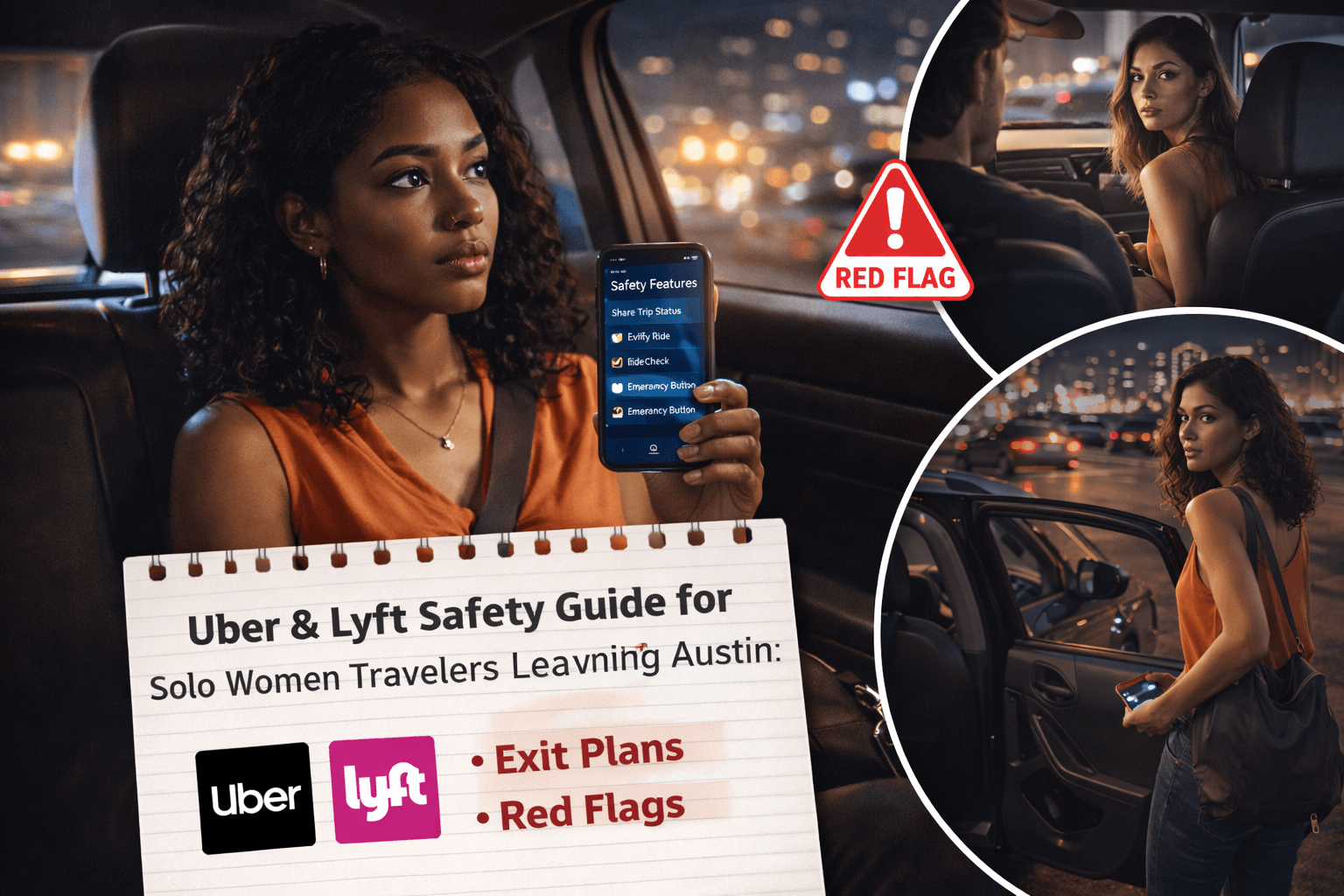
Getting into an Uber or Lyft alone should feel like a simple transition from one place to another, but for many solo women leaving Austin, it carries a quiet layer of tension. You are stepping into a stranger’s car, often in an unfamiliar area, trusting technology and judgment at the same time. I’ve seen many solo travelers feel a flicker of hesitation right before opening the door — not because rideshares are inherently unsafe, but because the situation asks for awareness.
This guide is a calm, practical safety framework designed specifically for solo women travelers. You’ll learn how to build a steady pre-ride routine, recognize red flags during a trip, use exit strategies without escalation, and turn the app itself into an active safety tool. The goal is not to travel in fear, but to ride with quiet confidence, knowing you have clear plans that protect your comfort and control.
Table of Contents
ToggleWhy Getting Into a Rideshare Alone Can Feel Unsettling
There is a specific moment that many solo women recognize: your ride pulls up, the license plate matches, and you reach for the door handle. Even when everything checks out, your body may still register a small surge of alertness. I’ve seen this reaction in hundreds of solo travelers leaving Austin for weekend trips. It isn’t paranoia. It’s the natural awareness that comes with entering a private space controlled by someone you don’t know.
A rideshare compresses several trust decisions into seconds. You are evaluating the driver, the environment, the time of day, and your own energy level all at once. When you travel alone, that awareness becomes sharper because there is no companion to share the mental load. This doesn’t mean rideshares are unsafe. It means your brain is doing quiet risk assessment in the background, and that assessment deserves structure rather than dismissal.
What usually helps most is reframing that unsettled feeling as information, not fear. It is your cue to move deliberately instead of automatically. When you build small rituals around pickup and entry, the moment stops feeling ambiguous. It becomes procedural. Experienced solo travelers don’t eliminate that flicker of awareness; they channel it into habits that create control. And once control is present, tension softens into confidence.
Your Pre-Ride Safety Routine Before the Car Arrives
The safest rideshare experiences usually begin before the car is even in sight. I’ve seen many solo women treat the waiting period as downtime, scrolling or standing distracted, when it’s actually the moment to build your safety buffer. A short pre-ride routine creates structure and removes last-second uncertainty. Instead of reacting when the car pulls up, you are already prepared.
Think of this routine as a quiet checklist you run every time you order a ride from Austin or nearby cities. It takes less than a minute, but it stabilizes the entire experience. When your brain knows what to look for, you enter the car with intention rather than hesitation.
Verifying the Driver and Vehicle Without Rushing
Verification is not about suspicion. It is about accuracy. Small mismatches are usually harmless, but catching them early prevents awkward or unsafe situations.
Before the car arrives:
-
Check The License Plate And Car Model In The App Carefully
-
Memorize The Driver’s First Name And Photo
-
Watch The Car Approach Instead Of Stepping Forward Immediately
-
Let The Driver Say Your Name First When Possible
-
Trust Any Mismatch Enough To Pause The Ride
Taking an extra few seconds is always acceptable.
Choosing Pickup Spots That Protect Visibility
Where you stand matters as much as which car you enter. Visible pickup zones reduce isolation and increase accountability.
Stronger pickup positioning includes:
-
Standing Near Business Entrances Or Hotel Doors
-
Choosing Well-Lit Areas With Foot Traffic
-
Avoiding Corners Or Empty Side Streets
-
Positioning Yourself Where Cameras Are Likely Present
-
Keeping A Clear Path To Step Back If Needed
Visibility supports calm decision-making.
Quiet Safety Checks Most Women Skip
Some of the most effective safety habits are subtle and often overlooked. They do not slow you down, but they increase readiness.
Helpful quiet checks include:
-
Sharing Your Trip Details With A Trusted Contact
-
Noting Nearby Landmarks Before Entering The Car
-
Keeping Your Phone In Hand Rather Than In A Bag
-
Organizing Your Belongings For Quick Movement
-
Scanning The Environment Once Before Boarding
These small habits create a steady mental baseline.
Waiting for the Car: How to Position Yourself in Public Spaces
The time between ordering your ride and seeing it arrive is when your environment matters most. I’ve seen many solo women stand exactly where the app drops the pin, even if that spot feels exposed or awkward. What usually feels safer is remembering that the pin is flexible. You are allowed to adjust your physical position to match your comfort, even if it means walking a few steps.
Waiting is not passive. It is a short window where you shape the conditions of your pickup. When you place yourself intentionally, you reduce isolation and increase the number of eyes around you. That social visibility quietly protects you and makes the transition into the car smoother.
A strong waiting position tends to include:
-
Standing Within Sight Of Staffed Entrances such as hotels or cafés
-
Keeping Your Back Near A Wall Or Solid Structure instead of open space
-
Avoiding Standing Alone At The Edge Of Empty Streets
-
Positioning Yourself Under Good Lighting At Night
-
Staying Close Enough To Step Inside A Business If Needed
Environment reading also matters. Before your car arrives, take a brief scan of who is around you and how the space feels. Busy, mixed groups and steady activity usually signal comfort. If the area feels unusually empty or tense, stepping inside a nearby business while you wait is a simple adjustment that changes the dynamic immediately.
This positioning is not about fear. It is about creating options. When options exist, your body relaxes and your attention sharpens in a calm way. You are no longer waiting passively for a car. You are managing a small, controlled transition.
Entering the Vehicle With Control and Confidence
The transition from sidewalk to car is one of the most important safety moments in a rideshare trip. It happens quickly, often in traffic or under social pressure to move fast. I’ve seen many solo women rush this step to avoid feeling awkward or holding up the driver. What usually feels safest is remembering that you are allowed to take a few calm seconds. A confident entry sets the tone for the entire ride.
Entering the vehicle is not just physical movement. It is a final checkpoint where you confirm identity, position yourself strategically, and organize your space. When this step becomes routine, hesitation disappears and control increases.
Confirming Identity Without Social Awkwardness
Identity confirmation can feel uncomfortable because it involves a stranger and a brief social exchange. The key is treating it as normal procedure rather than suspicion.
A smooth confirmation flow looks like:
-
Checking The License Plate Before Touching The Door
-
Asking “Who Are You Here For?” Instead Of Saying Your Name First
-
Matching The Driver’s Face To The App Photo
-
Listening To The Driver Say Your Name Clearly
-
Stepping Back If Anything Feels Mismatched
Calm verification protects both you and the driver.
The Safest Seat Position and Why It Matters
Where you sit affects your visibility and exit options. Experienced solo travelers almost always choose the same seat for a reason.
The strongest seating habits include:
-
Sitting In The Rear Seat On The Passenger-Side Diagonal
-
Keeping A Clear Line Of Sight To The Driver
-
Maintaining Easy Access To The Door Handle
-
Avoiding Seats Directly Behind The Driver
-
Leaving Personal Space Between You And The Front Seat
This position balances distance and awareness.
Keeping Exit Paths Mentally Available
Confidence comes from knowing you can leave if you need to. Even when nothing feels wrong, mentally mapping your exit reduces tension.
Helpful exit awareness includes:
-
Noticing Door Locks And Window Controls Immediately
-
Watching The First Few Turns Of The Route
-
Keeping Your Phone Accessible In Your Hand
-
Staying Aware Of Public Drop Points Along The Way
-
Avoiding Deep Distraction During The First Minutes
Mental exit paths create quiet reassurance.
Red Flags During the Ride You Should Treat Seriously
Most rideshare trips are uneventful, which is exactly how they should be. But part of riding with confidence is knowing which behaviors deserve your attention if they appear. I’ve seen many solo women dismiss early discomfort because they don’t want to seem dramatic or misinterpret a situation. The truth is that red flags rarely arrive as loud alarms. They show up as small inconsistencies that your body notices before your mind explains them.
This section is not about assuming bad intent. It’s about recognizing patterns that shift a ride from routine to questionable. When you name those patterns clearly, you remove hesitation. Instead of debating with yourself, you can respond calmly and early.
Some red flags that should immediately sharpen your awareness include:
-
Route Deviations Without Clear Explanation such as turning away from the app’s navigation
-
The Driver Ignoring The App’s Suggested Route Repeatedly without discussing it
-
Personal Questions That Feel Intrusive Or Persistent after polite deflection
-
Comments About Your Appearance Or Travel Alone Status
-
Driving That Feels Reckless Or Intentionally Erratic
-
The Driver Disabling The App’s Navigation Display
-
Doors Or Windows Being Locked In A Way That Feels Unusual
-
Attempts To Change The Destination Without Your Consent
What matters most is not any single item on this list. It’s the accumulation of signals. One minor deviation may have an innocent explanation. Multiple signals deserve action. Your body often registers discomfort before you articulate it. That early sensation is useful information.
When a red flag appears, your goal is not confrontation. Your goal is preparation. You begin shifting your attention toward exit options, public drop points, and communication tools. Treat awareness as a sliding scale. As signals increase, your readiness increases with them. Calm recognition is your strongest protection.
Exit Plans If Something Feels Wrong Mid-Ride
If a ride shifts from comfortable to uneasy, the most important thing is remembering that you are not trapped. I’ve seen many solo women hesitate in this moment because they worry about being rude or escalating tension. What usually feels safest is having a clear exit framework already in your mind. When you know your options, your voice stays steady and your actions stay controlled.
An exit plan is not a dramatic move. It is a sequence of calm decisions that prioritize visibility and distance. Your goal is to end the ride in a populated, predictable place without provoking confrontation. Most drivers respond neutrally when a passenger asks to stop. Confidence comes from treating the exit as a routine adjustment, not an accusation.
Calm Verbal Exit Scripts
Words matter because they shape the emotional tone of the interaction. Short, neutral phrases work best. You are informing, not debating.
Effective exit scripts include:
-
“Please Pull Over Here. I’d Like To End The Ride.”
-
“I’m Going To Get Out At This Stop, Thank You.”
-
“This Location Works For Me.”
-
Repeating The Request Calmly If Ignored
-
Avoiding Long Explanations Or Apologies
A steady tone keeps the exchange procedural.
Using Public Drop Zones Strategically
Where you choose to exit influences your safety immediately after leaving the car. Visibility and social presence are your priorities.
Strong drop locations include:
-
Hotel Entrances With Active Staff
-
Busy Restaurants Or Coffee Shops
-
Gas Stations With Open Counters
-
Transit Hubs Or Well-Lit Stops
-
Retail Stores With Security Presence
Aim for places where your presence blends naturally into public flow.
Contacting Help During a Ride
If discomfort escalates, communication becomes part of your exit plan. Your phone is both a signaling device and a support bridge.
Helpful in-ride actions include:
-
Calling A Trusted Contact And Speaking Clearly
-
Sharing Your Live Location Immediately
-
Using The App’s Emergency Features If Needed
-
Narrating Your Destination Out Loud
-
Preparing To Exit As Soon As The Car Stops
Visibility discourages escalation.
What to Do If the Driver Resists
Resistance is rare, but planning for it removes fear. Your focus stays on reaching a public space.
If resistance occurs:
-
Repeat Your Request In A Calm, Firm Voice
-
Direct The Driver Toward A Visible Public Area
-
Activate Emergency Features Without Announcement
-
Draw Attention By Speaking Louder If Necessary
-
Exit As Soon As The Car Stops Safely
Your safety outranks social comfort.
Using the App as an Active Safety Tool (Not Just Transportation)
Most solo women think of Uber and Lyft as transportation apps, but I’ve seen experienced travelers treat them as layered safety systems. When you actively use the app’s built-in features, you create a digital safety trail that runs quietly in the background. This is not about riding in fear. It’s about letting technology carry part of the awareness load so your mind can stay calm.
Your phone becomes a bridge between your physical ride and your support network. The strongest safety habits happen automatically before you even notice tension. When these features are part of your routine, you rarely need to think about them mid-ride.
Live Location Sharing
Live sharing transforms a private ride into a visible one. Someone you trust can see your route in real time, which adds accountability without changing the driver’s experience.
Smart sharing habits include:
-
Sending Your Trip Link Before The Car Arrives
-
Choosing One Trusted Contact As Your Default Share Person
-
Confirming They Received The Link
-
Keeping Sharing On For The Entire Ride
-
Updating Them If Plans Change Mid-Trip
Quiet visibility strengthens confidence.
Emergency and Reporting Features
Both apps include built-in emergency tools designed for fast escalation. Many riders never explore them until they need them.
Important safety features include:
-
Knowing Where The Emergency Button Lives In The App
-
Understanding How To Contact Local Emergency Services Through The App
-
Using In-App Safety Check-Ins If Prompted
-
Saving Ride Details Automatically
-
Reviewing Safety Settings Before Trips
Familiarity removes hesitation.
Creating a Digital Safety Trail
Every ride generates a record. Treating that record intentionally adds another layer of protection.
Helpful trail habits include:
-
Checking That Your Route Matches The Map Early
-
Screenshotting Driver Details If Something Feels Off
-
Saving Trip Receipts Automatically
-
Rating And Reporting Immediately After The Ride
-
Documenting Concerns While They Are Fresh
Documentation supports future safety.
Night Rides Require a Different Strategy
Night rides feel different, even when the route is familiar. Visibility drops, streets thin out, and your own energy level shifts after a long day. I’ve seen many solo women from Austin feel more alert at night not because danger is higher by default, but because uncertainty increases when the environment is harder to read. A nighttime strategy is less about fear and more about adjusting to different conditions.
What works during the day often needs small upgrades after dark. Your goal is to increase visibility, shorten exposure, and reduce decision fatigue. When nighttime rides become structured instead of spontaneous, they feel calmer and more predictable.
One of the biggest changes at night is environmental clarity. You want pickup and drop-off points that are unmistakably public. This often means choosing locations attached to active businesses rather than quiet curbside spots. Hotel entrances, 24-hour cafés, and well-lit storefronts act as anchors. If your original pickup pin falls in a dim or empty area, walking a short distance to a brighter zone is a smart adjustment.
Fatigue also plays a role. After evening activities, your reaction time and awareness can soften. I’ve seen experienced travelers counter this by simplifying their ride choices. They avoid unnecessary stops, confirm routes early, and keep conversation minimal so their attention stays on the environment. Night rides reward efficiency. The shorter and clearer the transition, the more comfortable it feels.
Finally, timing matters. Leaving venues slightly before crowds disappear gives you social cover and easier access to visible pickup zones. You are not rushing your evening. You are preserving options. When other people are still moving through the space, your ride blends into a shared rhythm instead of an isolated moment.
Preventive Habits That Make Every Ride Safer
The safest rideshare experiences are built on habits that feel almost invisible once they become routine. I’ve seen many solo women from Austin develop small pre-ride and in-ride behaviors that dramatically increase their sense of control without making travel feel rigid. These habits are not about constant vigilance. They are about quiet consistency.
When preventive habits are automatic, your brain has fewer decisions to make in the moment. That reduction in mental load creates calm. You are no longer improvising safety. You are following patterns that support it.
One of the strongest preventive areas is how you carry yourself and your belongings. Clothing and bag positioning influence both mobility and awareness. Keeping essentials organized means you never fumble under pressure. Crossbody bags worn in front of the body, phones kept in hand during entry, and shoes that allow confident movement all support quick transitions. These details sound small, but they shape how steady you feel.
Mental checklists also play a powerful role. Before entering any rideshare, experienced solo travelers run a rapid internal scan: driver verified, route visible, exit path understood. This scan takes seconds, but it replaces hesitation with certainty. I’ve watched women who use this habit enter cars with noticeably more ease because their brain recognizes the sequence.
Travel rhythm matters too. Rides that happen when you are rushed or overstimulated tend to feel more chaotic. Leaving a few minutes earlier than necessary, avoiding last-call exits from venues, and spacing out transitions between activities reduce pressure. When your schedule breathes, your awareness sharpens.
Preventive habits are not about predicting danger. They are about creating a stable baseline where most rides feel ordinary. And when ordinary becomes your default, confidence follows naturally.
Building Your Personal Rideshare Safety Ritual
The most confident solo travelers don’t rely on memory in the moment. They rely on ritual. A personal rideshare safety ritual is a repeatable sequence you follow every time you book a car, whether you’re leaving Austin or navigating a new city. I’ve seen many women describe a noticeable drop in travel anxiety once this ritual becomes automatic. It replaces improvisation with familiarity.
A ritual is not about expecting something to go wrong. It is about normalizing preparedness so your brain recognizes rideshare transitions as structured events. When the steps are familiar, your body relaxes and your decisions sharpen.
Mental Rehearsal Before Trips
Mental rehearsal builds calm muscle memory. You are not imagining worst-case scenarios in detail. You are briefly walking through your safety sequence so it feels ordinary.
Helpful rehearsal habits include:
-
Visualizing Yourself Verifying The Driver Calmly
-
Imagining Entering The Car With Steady Movement
-
Rehearsing A Simple Exit Script In Your Head
-
Picture Sharing Your Trip Automatically
-
Ending The Scenario With A Smooth Arrival
Familiar scenes reduce hesitation.
Communication Agreements With Home
A quiet communication plan adds emotional backing without constant check-ins. You and your trusted contacts understand the rhythm of your rides.
Supportive communication habits include:
-
Choosing One Default Safety Contact
-
Agreeing To Share Night Rides Automatically
-
Sending A Quick Arrival Message
-
Explaining Your General Travel Schedule
-
Keeping Expectations Calm And Practical
Connection travels with you.
App and Technology Preparation
Technology works best when it is prepared before you need it. Small setup steps remove friction.
Smart preparation includes:
-
Reviewing Emergency Features Inside The App
-
Enabling Automatic Trip Sharing
-
Updating Safety Settings Regularly
-
Keeping Your Phone Charged Before Night Rides
-
Testing Location Services
Prepared tools support smooth action.
Final Thoughts: Riding With Awareness, Not Fear
Rideshare travel is now part of everyday movement for many solo women leaving Austin, and most trips pass without incident. The goal of this guide is not to make rides feel heavy or tense. It is to replace uncertainty with structure. I’ve seen how a clear safety framework transforms the emotional tone of travel. When you know your routines, red flags, and exit plans, the experience feels steady instead of ambiguous.
Everything here returns to a simple principle: awareness is not fear. Awareness is clarity. You are not riding defensively. You are riding intentionally. Each small habit — from where you stand while waiting to how you enter the vehicle — adds a layer of control that your body recognizes as safety.
Solo travel is ultimately an exercise in trusting your judgment. Every calm decision you make reinforces that trust. And when trust grows, rideshares become what they are meant to be: practical bridges between places, carried by confidence rather than worry.
Related Posts
- Solo Female Travel Mistakes to Avoid on Austin Weekend Trips
- One-Night Solo Female Weekend Trips from Austin (Calm, Confident & Completely Doable)
- Solo Female Safety Tips for Weekend Trips Around Austin
- Best Brunch Spots Near Austin for Solo Women Who Want a Calm, Comfortable Weekend Morning
- Best Solo-Friendly Cafés and Quiet Places Near Austin for Women Who Need a Calm Recharge
- Best Airbnbs Near Austin for Solo Female Weekend Trips (Comfort-First, Joy-Ready)
- Weekend Trips Near Austin with Accessible Nature Trails for Solo Women
- Solo Travel Anxiety vs Intuition: How to Tell the Difference Before a Weekend Trip from Austin